Layne Flack

Leave a Reply

Leave a Reply

Your email address will not be published. Required fields are marked *

Layne Flack: Professional Poker Player Profile
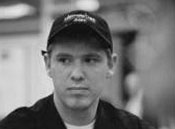
Layne Flack belongs to the younger generation of poker champions. Flack’s playing style is known to be fast and furious. He once said that he plays without fear, and he exhibits this tirelessly. He was known at the World Poker Tour (WPT) as “poker’s party boy” and “a dynamo in action.”

Player Snapshot

Full nameDee Layne Flack
NationalityAmerican
Date of birthMay 18, 1969
Date of deathJuly 19, 2021 (age 52)
BornRapid City, South Dakota
ResidenceLas Vegas, Nevada
Live tournament earnings$5,079,412 (source: Hendon Mob, verified May 2026)
Best live cash$577,725 (2008 WSOP, $1,500 PLO)
WSOP bracelets6 (source: WSOP.com)
WSOP cashes74 (source: WSOP.com)
WPT titles1 (2003 WPT Invitational, Los Angeles)
WPT final tables10
Poker Hall of FameInducted 2022 (posthumous)
Known playing styleAggressive, reads-based, flop specialist
Sponsors / teamNone at time of death

Layne Flack has several WSOP bracelets to his name. Among these are for the 2003 $2500 Omaha HiLo and the $1,500 Hold’em Shootout. He got the nickname “Back to Back Flack” in 2002, when he won the $2000 No Limit Hold’em and $1,500 No Limit. The No Limit Hold’em appears to suit Flack’s play style perfectly. Card Player Magazine gives out his philosophy in No Limit: “everything you think you should do, do the opposite.” Flack’s energetic play never fails to attract spectators. However, things were not always smooth sailing for this young champ.

Born in 1969 in Rapid City, South Dakota, Flack learned about poker at a very young age, when he started playing cards with his grandparents. Later he came to work at a casino as a dealer, and that was when he decided he wanted to pursue gaming as a profession. He would regularly go to another casino after work to hone his skills. He was eventually promoted to Night Manager, but he quit since he couldn’t attend to a part-time job and play different casinos at the same time. Soon he moved up to playing the pro tables.

At the big leagues, he became friends with Johnny Chan, who helped him improve his game. Chan, ever the optimistic winner, consoled Flack through an enormous loss, by telling him to “get some sleep and I will stake you tomorrow.” This encouraged Flack to try and recover his losses the next day, which he did. His deal with Chan was 50% with make-up. Another of Flack’s mentors was Huck Seed, a contemporary who had conquered the 1996 WSOP and walked away with a $1 million prize.

Flack was always a rambunctious fellow who loved his drink, but it was only around early 2000 that he started experimenting with drugs. In 2004 he was admitted to a rehabilitation center. Daniel “Kid Poker” Negreanu, a friend of Flack who was staking him at the time, footed the $80,000 bill for his treatment. Layne Flack has since recovered and is making the rounds again. He recently placed second at the $1,500 Pot Limit Hold-Em and finished high with $185,855.

Early Life and Path to Poker

Layne Flack was born Dee Layne Flack on May 18, 1969, in Rapid City, South Dakota — though he grew up largely in Montana, where card games were a household fixture long before he ever sat in a casino. His grandparents taught him pinochle, and the card sense he built around their table translated naturally to poker as he got older. He returned to Rapid City to finish high school in 1987, then took a dealer’s job at a local casino. In 1991, he attempted college, working as a dealer in Deadwood, South Dakota during summers.

The pivot from dealer to player happened organically. Flack would finish his shifts and head across town to play poker — reading opponents’ hands from the dealer side had already given him a distinctive advantage. According to accounts he later shared in the book Deal Me In and in interviews, casino patrons occasionally thought he was cheating because he could name what cards they held before they showed down. He wasn’t. He simply watched with an intensity most people reserve for things that matter to them, and poker already mattered to him more than anything else.

By 1993, he had quit dealing and moved to Reno, Nevada, with his girlfriend, grinding low-stakes tournament poker and cash games across the region. In 1995, his daughter Hailey was born, and Flack briefly relocated his family to Bozeman, Montana, where he helped open a card room. It was there he met Huck Seed, the 1996 WSOP Main Event champion, who observed Flack’s ability at the table and told him plainly: he was wasting his talent in Montana. He should go to Las Vegas. Flack left for Vegas in 1997, alone — and within months, he won the $1,500 No-Limit Hold’em event at the Hall of Fame Poker Classic at the Horseshoe for $67,800. His first big cash, in his first major event, in the city where poker was played seriously. The trajectory from that point was steep.

Career Timeline and Breakthrough

1997–1999: The arrival. Flack spent 1998 building his tournament resume and his relationships with the established pros. It was during this period he befriended Johnny Chan, who would become one of the most significant figures in his early career. As Flack later recounted, he had won a tournament and immediately squandered most of his prize in a cash game the same night. Chan found him in the session, told him to go sleep, and staked him in the following day’s tournament. Chan’s investment paid off — Flack won, and Chan collected half the prize. The mentorship that followed gave Flack both technical guidance and the confidence that comes from having a two-time WSOP Main Event champion vouching for your ability. In May 1999, Flack won his first WSOP bracelet in the $3,000 Pot-Limit Hold’em event for $224,400. A portion went to Chan as part of their staking arrangement.

2002–2003: The peak. The two years that cemented Flack’s reputation were extraordinary in their density of results. In 2002, he won two WSOP bracelets — the $2,000 No-Limit Hold’em for $303,880 and the $1,500 No-Limit Hold’em for $268,020 — in a stretch of weeks. The second win was particularly charged: Flack beat his own mentor, Chan, heads-up to claim it. Later that year, he made the final table of the inaugural WPT World Poker Finals at Foxwoods, finishing runner-up to Howard Lederer at a table that also included Ivey and Andy Bloch. Three months after that, in February 2003, he won the WPT Invitational Pro-Celebrity Tournament in Los Angeles — a field that included Lakers owner Jerry Buss, Men “The Master” Nguyen, and David Chiu — for $125,000. Then, at the 2003 WSOP, he did it again: two bracelets in the same series, the $2,500 Omaha Hi-Lo Split for $119,260 and the $1,500 Limit Hold’em Shootout for $120,000, played back to back. That final run cemented the nickname. It was no longer a cute label — it was a pattern. The poker media and the player community settled on a consensus: in the years 2002 and 2003, Layne Flack was the best tournament player in the world.

2004: The bottom. The success masked what Flack later described as a mounting catastrophe. He had begun experimenting with ecstasy in 2000 and progressed to methamphetamine. By 2004, in his own words from his chapter in Deal Me In, he was living in a one-bedroom apartment with his girlfriend Paulette, unable to pay rent, not eating, and no longer capable of functioning outside his addiction. His girlfriend and brother staged an intervention. They reached out to Negreanu, who had remained close to Flack and remembered a kindness Flack had shown him years earlier. Without hesitation, Negreanu paid $60,000 out of pocket to place Flack in a rehabilitation facility. “I was speechless,” Flack wrote. “Daniel had paid $60,000 out of his own pocket to get me into drug rehabilitation.” It is one of the more striking acts of friendship documented in the professional poker literature.

2008: Comeback. Flack’s return to the bracelet column came five years after his 2003 pair, at the 39th WSOP. In the $1,500 Pot-Limit Omaha event with rebuys, he built his stack methodically through the final table, eliminated Ted Forrest – his mentor and friend — and dispatched the final two opponents to win $577,725, the largest cash of his career. After the win, he was asked about his bracelet collection. He replied that he no longer had any of the first five. He had given three to family members — brothers and his father. He had left one at a friend’s house where it had not resurfaced. One had been stolen in a burglary. “I want to savour this a little bit,” he said at the trophy ceremony.

2008–2021: The long tail. Flack continued to compete on the tournament circuit through the 2010s and into the early 2020s, maintaining his presence on the WPT and returning to WSOP events each summer. His final recorded cash was a $778 result on July 30, 2020, at the WSOP Online. He was active on Twitter as late as April 2021. Three months later, he was gone.

Key Titles and Biggest Results

EventYearFinishPrizeNotes
WSOP $1,500 PLO (Rebuy)20081st$577,725Career-best cash; 6th bracelet
WPT UltimateBet.com Poker Classic20042nd$500,000Runner-up to Eric Brenes
WSOP $2,000 NLHE20021st$303,8802nd bracelet; defeated Johnny Chan HU for 3rd
WSOP $1,500 NLHE20021st$268,0203rd bracelet; defeated Chan heads-up
WPT World Poker Finals20022nd$186,900Runner-up to Howard Lederer
WSOP $3,000 PLH19991st$224,4001st bracelet; staked by Johnny Chan
WPT Invitational (Pro-Celebrity)20031st$125,000WPT title; beat Jerry Buss HU
WSOP $2,500 Omaha Hi-Lo20031st$119,2604th bracelet
WSOP $1,500 Limit Hold’em Shootout20031st$120,0005th bracelet; won back-to-back with above
WinStar River Poker Series Main Event20161st$225,190One of his last major titles

What these results collectively reveal is a flop-game specialist with exceptional range. His six WSOP bracelets spanned five different game formats — pot-limit hold’em, no-limit hold’em (twice), Omaha hi-lo, limit hold’em, and pot-limit Omaha — making him one of the more versatile multi-format champions of his generation. He was not a Main Event player by design; his highest Main Event finish was 194th in 2005. He was a specialist in mid-to-large buy-in flop events where his reads and aggression were most lethal. His record across that format, during his peak years, has a legitimate claim to being among the strongest of any American player in the early 2000s.

Playing Style and Strategic Identity

The most quoted description of Flack’s playing style comes from Hellmuth, who said he was not scared of anyone in the world at No-Limit Hold’em — but had “a healthy respect for drunk Layne.” The joke contained a genuine observation: Flack’s ability to read hands and control action appeared, by multiple accounts, to persist regardless of his physical condition. WPT director Savage described his reads as “incredible — I’ve never seen anything like it in my life. He could literally talk his opponent into giving him chips.”

The tactical foundation was a new-school aggression applied to old-school intuition. As the WSOP’s own profile noted, Flack “bridges the gap between the old guard and the newer young guns” — he had learned flop strategy in South Dakota Deadwood cardrooms, among players whose approach was fundamentally feel-based, but applied it with a velocity and positional awareness that looked more like the internet-era players who would follow him. His philosophy, as paraphrased by Card Player Magazine, was deliberately contrarian: in no-limit hold’em, do the opposite of what the situation seems to call for. That kind of unorthodox aggression is a common claim in poker. In Flack’s case, it was backed by an apparent ability to track the exact hand his opponent held — which turned random-seeming action into calculated pressure.

He was, by all accounts, a flop game specialist in the deepest sense: someone who made his money not on preflop card strength but on his ability to extract value or create fold equity from the moment the community cards hit the felt. Erik Seidel, an eight-time bracelet winner who staked Flack in a tournament at the Bellagio, recalled watching him raise every hand without looking at his cards late in a tournament — yet dominate the table and win. Seidel noted, drily, that it was the last time he staked him — but also that it was the kind of performance you remembered because you couldn’t quite explain it.

At the final table, Flack was notably unintimidated by reputation. Beating Chan — his own mentor — heads-up in 2002 to win his third bracelet was not incidental. It was characteristic. He respected the people who taught him the game. He also understood that the tournament did not care who taught him.

Online Poker and Cash Games

Flack was a significant cash game presence in Las Vegas throughout his peak years, sitting in the highest-stakes live games available. According to Poker News Daily and multiple peers, at his peak he was regarded by many as one of the best — if not the best — cash game player in the world, separate from his tournament results. The size of those games and the winnings from them are not documented in the public record.

His online poker activity, if any, was not publicly documented under a known screen name. By the time online poker achieved the documentation infrastructure to track high-stakes players reliably, Flack’s addiction had disrupted his peak form, and his later career was primarily anchored in live events.

He made no documented appearances on Hustler Casino Live, Live at the Bike, or other streamed high-stakes productions — which are primarily post-2020 phenomena — though his earlier appearances on Poker After Dark placed him in televised cash game settings during the boom years.

Beyond the Felt

Flack’s public profile was built almost entirely through his presence at the table rather than through commercial partnerships or media projects. He contributed a chapter to Deal Me In (Lyle Stuart, 2009), a collection of first-person accounts by twenty prominent poker professionals. His chapter is one of the most candid pieces of writing in the entire book — a direct, unvarnished account of his addiction and the intervention that preceded his 2004 rehabilitation. It remains one of the few primary-source documents of what peak Flack felt like from the inside.

He maintained an active Twitter presence under the handle @back2backflack, posting about poker, golf, sports, and general commentary into the months before his death. His final poker-related tweet, in April 2021, was a tribute to a deceased friend from the early WSOP days.

His daughter Hailey, who was raised in part by Flack’s extended network of poker friends, participated in a PokerNews podcast following his posthumous Poker Hall of Fame induction in July 2022. Her remarks were widely noted for their combination of honesty about Flack’s struggles and clear-eyed affection for the man he also was.

Flack’s Struggles and the Honest Record

Any profile of Layne Flack that does not address his addiction is incomplete, because Flack himself did not avoid the subject. In Deal Me In, he documented his descent in clear terms, describing 2004 as the moment when “the lifestyle I was leading was rapidly destroying me.” His 2004 rehabilitation, funded by Negreanu, appeared to provide a meaningful reset: he returned to the circuit, won his sixth bracelet in 2008, and continued playing for over a decade.

In the days after his death in July 2021, Mike Matusow told the audience of his tribute podcast that Flack had been sober for approximately two years. The Clark County coroner’s toxicology report, released three months later, listed the cause of death as fentanyl, cocaine and methamphetamine intoxication, with the manner of death ruled accidental. Both things can be true — a person can make significant progress and still relapse fatally. The coroner’s findings are documented fact; the emotional reality of what the people who knew him believed is also documented. Neither version of Flack cancels the other.

The tributes that poured in after his death — from Hellmuth, Negreanu, Jennifer Harman, Scotty Nguyen, Seidel, Matusow, and dozens of others — were notable for their consistency. Nearly every person who spoke about him mentioned his humour, his loyalty, and a specific act of generosity or friendship. Nguyen described the moment at the 2008 WSOP when he couldn’t afford his $50,000 HORSE buy-in: Flack walked past, heard the situation, and flipped him a $25,000 chip on the spot. Nguyen won the tournament for nearly $2 million. Flack collected roughly $750,000 of it.

That was Flack: capable of giving away his bracelets and bankrolling a friend’s tournament entry in the same year he couldn’t keep his own apartment.

Legacy and What to Watch

Layne Flack is no longer an active player. His legacy now lives in the Poker Hall of Fame, in the stories told about the early 2000s by the people who played alongside him, and in his own first-person account in Deal Me In. For anyone researching that era of the game — the years just before and after Chris Moneymaker’s 2003 Main Event that launched the poker boom to a mass audience — Flack is an indispensable figure. He was there at the exact moment when tournament poker became a television product, and his personality and table presence were part of what made it watchable.

For poker fans, the Poker Hall of Fame ceremony in July 2022 — where Hailey Flack spoke on behalf of her father, and where friends like Derick “Tex” Barch described what he meant to them — serves as the closest thing to a public valediction for a player who never quite got the mainstream recognition his results warranted. That ceremony, and the PokerNews podcast episode that accompanied it, are worth seeking out for anyone who wants to understand what Flack meant to the community that knew him best.

FAQ

How much did Layne Flack win in poker?

Flack recorded $5,079,412 in verified live tournament earnings, according to the Hendon Mob database (verified May 2026). His career-best single cash was $577,725 for winning the $1,500 PLO event at the 2008 WSOP. His total earnings from cash games are not publicly documented, but peers and observers consistently described him as a significant winner in the highest-stakes Las Vegas live games at his peak.

How many WSOP bracelets did Layne Flack win?

Six, spanning the years 1999 to 2008 — verified against WSOP.com records. His bracelets came in the $3,000 PLH (1999), $2,000 NLHE (2002), $1,500 NLHE (2002), $2,500 Omaha Hi-Lo (2003), $1,500 Limit Hold’em Shootout (2003), and $1,500 PLO (2008). Only eight players in WSOP history have won more bracelets than Flack.

What was Layne Flack known for?

Primarily for his six WSOP bracelets, his “Back-to-Back Flack” nickname earned by winning consecutive tournaments on multiple occasions, and his status as one of the dominant tournament players of the early 2000s poker boom. He was equally known for his extraordinary hand-reading ability — which reportedly held up even when he was drinking — and for a warmth and generosity that left an impression on virtually everyone who knew him. The WPT’s Matt Savage called him the best player in the world in the early 2000s, “and it’s not even close.”

What was Layne Flack’s poker style?

Aggressively intuitive, with a particular strength in flop-based game formats. He was not a GTO-trained modern player — he predated that framework — but a reads-driven aggressor whose ability to identify opponent holdings from betting patterns and physical tells was described by peers as exceptional. Phil Hellmuth said he had “a healthy respect for drunk Layne,” a backhanded tribute that captured the paradox: Flack’s talent seemed to exceed his circumstances. The WSOP officially described him as “one of the best flop game players” of his generation.

Where was Layne Flack from?

He was born in Rapid City, South Dakota, on May 18, 1969, and raised largely in Montana. He dealt cards in South Dakota casinos before moving to Reno, Nevada, in 1993, then settled permanently in Las Vegas in 1997 or 1998. He was living in Las Vegas at the time of his death in July 2021.

What happened to Layne Flack?

Flack was found dead at his Las Vegas home on July 19, 2021, at the age of 52. The Clark County coroner, Melanie Rouse, confirmed that the cause of death was fentanyl, cocaine and methamphetamine intoxication, and that the manner of death was accidental. Flack had a well-documented history of substance abuse stretching back to the early 2000s, and had spoken openly about it in the book Deal Me In and in interviews. He was posthumously inducted into the Poker Hall of Fame in July 2022.