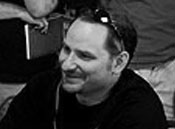
Player Snapshot
| Full name | Andrew Elliot Bloch |
| Nationality | United States |
| Date of birth | 1 June 1969 |
| Birthplace | New Haven, Connecticut |
| Current base | Las Vegas, Nevada |
| Live tournament earnings | $5,385,416 (Hendon Mob, verified May 2026) |
| WSOP bracelets | 1 (2012, $1,500 Seven Card Stud) |
| WSOP Circuit rings | 1 (2005, Rio Las Vegas) |
| WSOP earnings | $3,210,576 (WSOP.com) |
| Best single cash | $1,029,600 (2006 WSOP $50,000 H.O.R.S.E., 2nd) |
| Hendon Mob All-Time Money List | 447th |
| Playing style | Analytical, math-led, hybrid mixed-game specialist |
| Notable sponsorships | Former Team Full Tilt (2005–2011); none current |
| Other careers | Electrical engineer (MIT, two degrees, 1992); attorney (Harvard Law JD, 1999, never practised) |
Who is Andy Bloch?
Andy Bloch is the most quietly distinctive figure of the early televised-poker era — a player whose career is best understood not as a poker career at all, but as one long, continuous attempt to find casino games with positive expected value and beat them with code, math and team play. Poker is simply the medium he settled on after he had already cracked at least two other games. That framing matters, because it explains everything else: the cold tempo at the table, the willingness to play every variant in a mixed-game lineup, the engineer’s patience to grind out final tables in obscure stud and razz fields long after the no-limit hold’em fashion had moved on.
The headline numbers are real. Bloch has $5,385,416 in verified live tournament earnings on Hendon Mob through mid-2025, one WSOP bracelet, one WSOP Circuit ring, and a body of mixed-game work at the World Series of Poker — 89 cashes for more than $3.2 million according to WSOP.com — that ranks him among the most durable tournament players of his generation. He spent nearly a decade carrying the label “best player never to win a bracelet,” then shed it in June 2012 with a heads-up win over Barry Greenstein in a $1,500 Seven Card Stud event.
But the more revealing thing about Bloch is what came before. He has two electrical engineering degrees from MIT and a JD from Harvard Law. He was a member, and later a manager, of the MIT Blackjack Team that inspired the book Bringing Down the House and the Kevin Spacey film 21. And before he was on that team, he had already, alone, built a computer model to beat a forgotten house-banked game called Hickok 6-card poker at Foxwoods — the exploit that got him noticed by the MIT crew in the first place. That story is the spine of who he is.
Early Life and Path to Poker
Bloch was born in New Haven, Connecticut on 1 June 1969 and grew up around cards — family games, then high-school poker. He went to MIT and graduated in 1992 with two electrical engineering degrees, then took a job designing computer chips near Boston. The pattern that would define his career started immediately: he was bored at work, intrigued by the new Foxwoods Resort Casino a two-hour drive away, and curious about whether casino games could be beaten with software.
The Hickok episode is the one most existing profiles skip past. In 1993, briefly unemployed after being fired from his first engineering job, Bloch noticed that Foxwoods was running a house-banked game called Hickok 6-card poker — similar in structure to Caribbean Stud or Let It Ride. He wrote a strategy program for it and calculated a player edge of roughly 6%. Through a weekly Boston-area poker game he had found on the Usenet newsgroup rec.gambling, he met a handful of MIT alumni who were already part of the MIT Blackjack Team. They pooled resources, ran the Hickok game as a team for a few months at around $30 an hour, and walked away with close to $100,000 before the casino changed the rules. The MIT Blackjack Team, impressed, invited him to their practices in 1994.
By the mid-1990s he was a fully active member of the MIT team — eventually a manager, recruiting and running trips, including the Monte Carlo expedition Ben Mezrich would later chronicle in Busting Vegas. Bloch has said publicly that he made up to $100,000 in a single session at the blackjack tables. The team’s role in the book Bringing Down the House and the film 21 turned the wider story into pop-culture legend, though Bloch himself has been careful to note that the cinematic version compresses and embellishes a far more procedural reality.
Harvard Law followed in 1996. He paid his way through largely with blackjack winnings, skipping the last week of classes in both 1997 and 1998 to play the WSOP Main Event (he had to sit out 1999 to actually graduate). He passed the bar that year. He has never practised law for a firm.
Career Timeline and Breakthrough
Bloch’s tournament career started in the same year as his engineering one. In late 1992 he won a $100 World Poker Finals no-limit hold’em tournament at Foxwoods — the first time he had ever played the format. For most of the 1990s, poker was a sideline to blackjack. The shift came after the bar exam: with no law job that interested him, he played, traded stocks, and waited for something to develop.
2001–2002 — From local pro to circuit name. Bloch made two WSOP final tables in 2001 and went back to Foxwoods in 2002 to win a seven-card stud tournament. Those were the results that signalled he was more than a recreational MIT alum.
2002–2003 — WPT Season 1 turns him into a TV face. In the inaugural World Poker Tour season, Bloch finished third at both the Foxwoods World Poker Finals (for $102,350) and the Commerce Casino L.A. Poker Classic (for $125,460). Two third-place finishes on a brand-new televised tour, in front of an audience that had never seen a player explain hand math in real time on camera, made him recognisable to a public that had never heard of MIT card counting.
2005–2006 — Full Tilt era begins. Bloch joined the founding wave of Team Full Tilt in 2005 alongside Howard Lederer, Chris Ferguson, Phil Gordon and Phil Ivey. He was both a sponsored pro and a shareholder via the company’s parent, Tiltware. The same year he won a WSOP Circuit ring at the Rio in Las Vegas and the $10,000 Ultimate Poker Challenge II championship. He also began the WPT boycott he and several other pros mounted over the tour’s player-release form — a dispute that ended in a 2008 lawsuit settlement.
2006 — The Chip Reese duel. The inaugural $50,000 H.O.R.S.E. event at the WSOP, designed as a true mixed-game world championship, came down to Bloch and the late Hall of Famer David “Chip” Reese. Their heads-up battle lasted 286 hands — still the longest heads-up duel in WSOP history. Reese won; Bloch banked $1,029,600 for second, which remains his largest single cash, and Reese took his third and final bracelet before his death the following year. The match made Bloch’s reputation as a complete mixed-game player and gave him the unwelcome nickname he would carry for years: “the best player without a bracelet.”
2007–2010 — Final tables without the win. Bloch racked up WSOP final tables across stud, Omaha and 2-7 lowball without breaking through. In March 2008 he finished runner-up to Chris Ferguson in the NBC National Heads-Up Poker Championship, and at the 2008 WSOP he was runner-up to Nenad Medić in the $10,000 Pot-Limit Hold’em World Championship for $488,048.
2011 — Aussie Millions; then Black Friday. Early 2011 brought a win in the A$10,500 8-Game event at the Aussie Millions in Melbourne for roughly $103,800. Two months later, on 15 April 2011, the U.S. Department of Justice indicted the executives of PokerStars, Full Tilt Poker and Absolute Poker. Full Tilt’s American business never recovered. As a shareholder in Tiltware, Bloch was caught up in the fallout (covered separately below).
2012 — Bracelet at last, in the middle of a storm. On 2 June 2012, Bloch won the $1,500 Seven Card Stud event at the WSOP — a 367-runner field — beating Barry Greenstein heads-up to take the bracelet and $126,363. Later that summer he finished third in the $50,000 Poker Players Championship for $561,738, deep into a final table populated by the highest mixed-game pedigree in the game. The bracelet finally ended the “best without one” narrative; the timing, with Full Tilt still unwinding, gave the win an ambivalent edge in his own retelling.
2013–present — A reduced live footprint. Bloch is no longer on the live circuit full time, but he still plays the WSOP most summers. His most recent recorded live cash on Hendon Mob is a $3,120 finish dated 22 June 2025 — proof that he remains active, even if no longer a fixture on televised final tables.
Key Titles and Biggest Results
| Event | Year | Finish | Prize (USD) | Notes |
|---|---|---|---|---|
| WSOP $50,000 H.O.R.S.E. World Championship | 2006 | 2nd | $1,029,600 | 286-hand heads-up duel with Chip Reese; longest HU in WSOP history |
| WSOP $50,000 Poker Players Championship | 2012 | 3rd | $561,738 | Mixed-game final table including the era’s best lineup |
| WSOP $10,000 Pot-Limit Hold’em World Championship | 2008 | 2nd | $488,048 | Lost heads-up to Nenad Medić |
| Pro-Am Poker Equalizer | 2006 | 1st | $500,000 | Beat Phil Laak heads-up; aired on ESPN in 2007 |
| WPT L.A. Poker Classic | 2003 | 3rd | $125,460 | WPT Season 1 final table |
| WPT World Poker Finals (Foxwoods) | 2002 | 3rd | $102,350 | WPT Season 1 final table |
| Ultimate Poker Challenge II Championship | 2005 | 1st | $167,000 | $10,000 buy-in main event |
| WSOP $1,500 Seven Card Stud | 2012 | 1st (bracelet) | $126,363 | Beat Barry Greenstein heads-up; first WSOP bracelet |
| Aussie Millions A$10,500 8-Game | 2011 | 1st | $103,847 | Confirmation as a true mixed-game player |
| WSOP Circuit Rio Las Vegas | 2005 | 1st (ring) | — | WSOP Circuit ring |
Collectively, these results tell a specific story. Bloch is not a one-game tournament specialist who occasionally cashes in mixed events; he is a mixed-game specialist who has built nearly half his earnings — and almost every major final table — in non-hold’em or rotation formats. The $50K H.O.R.S.E. and the $50K Poker Players Championship are tests of breadth more than depth, and Bloch deep-runs them. His no-limit results are real but selective; his stud, Omaha and 2-7 record is dense.
Playing Style and Strategic Identity
Bloch is the rare pro whose self-description is also accurate. He has called his style “a mix of instincts and mathematics,” and what makes him distinctive is the direction of that mix — instinct used to deviate from a baseline he has worked out rigorously, rather than instinct used in place of one.
A few observable patterns stand out:
Mixed-game breadth. In an era when most high earners specialised in no-limit hold’em, Bloch built his reputation in stud, razz, 2-7 triple draw, pot-limit Omaha and full H.O.R.S.E. rotations. The 286-hand Reese duel is the clearest illustration — both players were comfortable across all five H.O.R.S.E. games, and the match dragged on because neither could find a structural edge in any one of them.
Range awareness before “range awareness” was the vocabulary. Bloch was using the language of expected value, pot odds and implied odds publicly in interviews and instructional content in the mid-2000s, well before solver-led GTO study became the default. His later instructional video work — including a widely circulated explanation of EV in relation to range reading — predates the modern training-site era by a decade.
Patience at heads-up. The Reese match is the headline data point, but the broader pattern is consistent: Bloch is comfortable in long, low-variance heads-up situations where most opponents tilt or force action. He has reached at least three notable televised heads-up finals — vs Reese (lost), vs Phil Laak in the Pro-Am Equalizer (won), and vs Chris Ferguson at the NBC National Heads-Up (lost). The format suits a player who is happy to play the 200th hand the same way he played the 20th.
Calmness as table image. Other pros have described Bloch as analytical, disciplined and unreadable rather than overtly aggressive. He is rarely the loudest player at the table and rarely the most active; the threat he poses is that he is almost never out of position on a decision he hasn’t already thought through.
Online Poker and Cash Games
From 2005 until the site’s collapse, Bloch was a Team Full Tilt pro on Full Tilt Poker. He has stated publicly — and consistently since — that he donated 100% of his winnings on the site to charity, with proceeds during the 2006 WSOP qualification cycle directed in part to Darfur relief work via Don Cheadle and Annie Duke’s Ante Up for Africa initiative, in which Bloch played in 2007.
His verifiable online career largely ran inside the Full Tilt ecosystem. After Black Friday and the eventual closure of Full Tilt’s U.S. business, Bloch did not become a regular on PokerStars or Hustler Casino Live in the way several contemporaries did. He has appeared on poker podcasts — including a substantive Thinking Poker interview in 2018 — and in instructional video work, rather than as a high-stakes cash-game livestream regular.
Beyond the Felt
Blackjack. Bloch’s blackjack output is, in some ways, more polished than his poker output. He starred in Beating Blackjack, a long-running instructional DVD that walks through basic strategy, the Hi-Lo count and team-play camouflage, and he was featured in the documentary The Hot Shoe. He is one of the very few former MIT Blackjack Team members willing to talk publicly about how the operation worked.
Books and instruction. He co-authored The Full Tilt Poker Strategy Guide: Tournament Edition and contributed to Champion Fundamentals: Up Close with the Pros alongside Antonio Esfandiari, Phil Laak and Gus Hansen.
Charity. Beyond the Full Tilt-donations pledge, Bloch has been a regular at charity tournaments, including the inaugural 2007 Ante Up for Africa event at the WSOP, which raised more than $700,000 for Darfur-related causes.
Game theory side projects. Bloch is, by his own (slightly tongue-in-cheek) description, a former Roshambo (rock-paper-scissors) world champion and has periodically written about game-theory questions outside poker. He once described his career résumé as “Poker Player, MIT Blackjack Team, Lawyer, Engineer, Consultant, Programmer, Entrepreneur, Genealogist,” which captures the diffuse nature of his interests.
Reputation: Full Tilt, in Balance
The single complicating chapter in Bloch’s public record is his role at Full Tilt Poker. He was both a sponsored pro and a shareholder in the parent company, Tiltware. After the 15 April 2011 indictments, the U.S. Department of Justice characterised Full Tilt as having defrauded customers of more than $300 million — money owed to players that the company did not hold in segregated accounts. Howard Lederer, Chris Ferguson and CEO Ray Bitar became the public faces of community anger, and a portion of the poker community has not forgiven any senior figure associated with the site.
Bloch’s situation differs in important specifics. He was not personally named as a defendant in the way Lederer, Ferguson, Bitar and Rafe Furst were in the later civil amendment. In a 2012 interview with DiamondFlushPoker — picked up by PokerNews — he placed the bulk of the blame on Bitar, saying that the CEO had never given the wider Team Full Tilt group the full picture of the company’s financial state and that “we didn’t have much input into what was going on.” He has, in subsequent interviews including the 2018 Thinking Poker episode, addressed Black Friday and The Lederer Files directly.
The fair summary is that Bloch was on the inside of a company that did serious harm to its players, was a beneficiary of its sponsorship structure, and was also one of the first insiders to publicly criticise the executives who steered it onto the rocks. The poker community’s reception of him has been, on balance, more sympathetic than its reception of the executives — though not uniformly so. Readers will draw their own conclusions.
Current Status and What to Watch
Bloch is in a deliberately reduced phase of his live tournament career. He is no longer a fixture on the global circuit, but he continues to enter selected WSOP events each summer; his last recorded Hendon Mob cash, a $3,120 finish, is dated 22 June 2025. He sold (or has been trying to sell, across several listings) the Las Vegas mansion he built in 2011, most recently re-listed in late 2025 — a sign of a player consolidating rather than expanding.
What is worth watching: whether Bloch makes another sustained run at the WSOP mixed-game schedule. The $10,000 Seven Card Stud, the $1,500 Razz and the $50,000 Poker Players Championship are the events where his edge has historically been largest, and the fields in those events have not got dramatically tougher since his last final table. A second bracelet — in a stud variant in particular — is not an unreasonable expectation for the next two summers if he commits to a full schedule.
Frequently Asked Questions
Andy Bloch was born in New Haven, Connecticut, on 1 June 1969. He attended MIT in Massachusetts and Harvard Law School, then moved to Las Vegas, Nevada, where he is currently based.
Yes. Bloch joined the MIT Blackjack Team in 1994, two years after graduating from MIT with two electrical engineering degrees, and later became a manager of the team. He played in international trips including Monte Carlo, which Ben Mezrich documented in Busting Vegas. The team’s broader story inspired Bringing Down the House and the film 21.
Bloch has one WSOP bracelet, won on 2 June 2012 in a $1,500 Seven Card Stud event for $126,363. He beat Barry Greenstein heads-up at a final table that also included David Williams. He also holds a WSOP Circuit ring from a 2005 win at the Rio in Las Vegas.
Bloch has $5,385,416 in verified live tournament earnings according to Hendon Mob as of mid-2025. Of that, more than $3.2 million has come at the World Series of Poker across 89 cashes, according to WSOP.com. His single biggest cash is $1,029,600 for finishing second to Chip Reese in the inaugural $50,000 H.O.R.S.E. event at the 2006 WSOP.
Bloch describes himself as playing a mix of mathematics and instinct, with the math doing most of the structural work. He is a mixed-game specialist — strong in stud, razz, 2-7 lowball, pot-limit Omaha and full H.O.R.S.E. rotations — and is known for patience in long heads-up matches, most famously the 286-hand 2006 duel with Chip Reese.
Yes, but on a reduced schedule. His most recent recorded live cash on Hendon Mob is dated 22 June 2025. He is no longer a fixture on the global circuit and is not actively sponsored, but he continues to play selected WSOP events each summer.