Amir Vahedi

Leave a Reply

Leave a Reply

Your email address will not be published. Required fields are marked *

Amir Vahedi: Professional Poker Player Profile
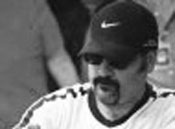
Player Snapshot

Full nameAmir Vahedi (also recorded as Abdol Vahedi)
NationalityIranian (Iranian-American)
Date of birth25 February 1961
Date of death8 January 2010 (Las Vegas, Nevada)
Hometown / baseBorn Tehran, Iran; resident of Sherman Oaks, California
Live tournament earnings$3,276,428 (Hendon Mob, verified April 2026)
WSOP bracelets1
WSOP cashes9 (career WSOP earnings: $671,216)
WPT titles0 main events; 1 LAPC side-event title (Limit Hold’em, 2005)
Other major titlesUltimate Poker Challenge Season 3 champion (2005); 2001 No-Limit Texas Hold’em Player of the Year
Playing styleAggressive, opportunistic, unpredictable
Sponsors / teamNone active at time of death

Who Is Amir Vahedi?

Amir Vahedi is one of the most beloved figures in poker’s modern era — a cigar-chomping, ever-smiling tournament aggressor whose biography reads less like a poker résumé and more like a survival story. Born in Tehran in 1961, he served in the Iranian army during the Iran–Iraq War, fled to Pakistan as a war refugee, and eventually rebuilt his life in Sherman Oaks, California, where bankruptcy in business pushed him toward a Los Angeles cardroom — and a calling. Within seven years of his first recorded tournament cash, he was sitting at the most important final table in poker history.

His one WSOP bracelet, his sixth-place finish in the 2003 WSOP Main Event during Chris Moneymaker’s world-changing run, and his 156 career tournament cashes for over $3.27 million in earnings (per The Hendon Mob) tell only half the story. The other half is a man whose famous mantra — “In order to live, you must be willing to die” — was not a poker tagline but a literal description of how he had lived. As Nolan Dalla observed in retrospective coverage, Vahedi played the way he survived: by taking chances at key moments.

He died on 8 January 2010 from complications of diabetes, at 48 years old. Sixteen years on, the Iranian’s name still surfaces every time poker historians revisit the boom era — and every time someone asks who taught Ben Affleck to play.

Early Life and Path to Poker

Amir Vahedi was born on 25 February 1961 in Tehran, into the final stretch of the Pahlavi era and on the doorstep of revolution. As a young man he enlisted in the Iranian army and fought in the Iran–Iraq War of the 1980s — an eight-year conflict that left hundreds of thousands dead on both sides. Multiple sources, including the Hendon Mob biographical record, place him as a former soldier who came to the United States as a political refugee. The route out, by his own family’s account in profile interviews, ran through Pakistan with a brother-in-law before he eventually secured American papers.

He landed in Southern California and tried business first. He ran several ventures of his own and, by some profile accounts, was reasonably successful before a turn of luck left him bankrupt. Looking for work and looking for relief, he drifted into the cardrooms that ring Los Angeles — Hollywood Park, the Bicycle Casino, Commerce — and discovered something he was unusually good at.

His first recorded tournament cash, per Hendon Mob data, came in December 1996 at a $100 No-Limit Hold’em event in Los Angeles, where he finished third for $1,800. He was already 35 years old. He would not waste the late start.

Career Timeline and Breakthrough

1997 — First serious title. Vahedi broke through at the Legends of Poker tournament in Los Angeles, establishing himself as a fixture on the Southern California circuit. The aggressive, hard-to-read style that became his signature was already visible.

2001 — Player of the Year. He was named No-Limit Texas Hold’em Player of the Year — a recognition that, in the pre-boom era, marked him as one of the most consistent NLH tournament players in the country.

May–June 2003 — The peak. This is the stretch that locked Vahedi into poker’s collective memory. On 6 May 2003 he won the $1,500 No-Limit Hold’em event at the WSOP, defeating a field of 530 opponents for $270,000 and a gold bracelet. Two weeks later, he sat down for the Main Event. By the end of Day 2 he led the field of 111 survivors with 303,400 chips. When the final nine assembled, Vahedi held the second-largest stack in the room — 1,407,000 chips — trailing only an unknown amateur from Tennessee named Chris Moneymaker.

He was, by the lights of most observers in the room, the favourite. He did not get there. After tangling in two hands he could not afford to lose — first against Jason Lester, then a brutal pot lost to Sammy Farha — Vahedi finished sixth for $250,000. He later told tournament director Matt Savage, in a line widely cited in his obituaries, that he had simply gotten nervous; that he was supposed to be the Moneymaker that year. That was the line, more than any other, that captured the ache of his final-table experience.

2005 — Biggest single cash. In February 2005 he won the Limit Hold’em event at the L.A. Poker Classic, a WPT-affiliated tournament, for $446,292 — the largest single payday of his career. Later that year he captured the Ultimate Poker Challenge Season 3 final in Las Vegas for $181,390.

2008 — The last big run. In April 2008 Vahedi finished seventh in the $25,000 WPT World Championship in Las Vegas for $237,435 — confirmation that, even as his energy and health waned, the instincts had not. His final recorded cash on Hendon Mob was on 18 September 2009.

2010 — A sudden ending. He died on 8 January 2010 in Las Vegas. His diabetes had been a quiet, long-running fight; the complications, when they came, came fast.

Key Titles and Biggest Results

EventYearFinishPrizeNotes
L.A. Poker Classic — $5,000 Limit Hold’em (WPT-affiliated)20051st$446,292Largest single career cash
WSOP — $1,500 No-Limit Hold’em20031st$270,000His only WSOP bracelet; defeated 530 opponents
WSOP Main Event — $10,000 Championship20036th$250,000The Moneymaker year; entered the final table 2nd in chips
WPT World Championship — $25,000 NLH20087th$237,435Bellagio, Las Vegas
Ultimate Poker Challenge — Season 3 Final20051st$181,390Las Vegas; aired on television
Card Player Magazine Player of the Year20032ndRunner-up to Men Nguyen

Looking at the spread of these results together tells you something important about what kind of professional Vahedi actually was. He was not a one-hit wonder, but he also was not a Negreanu-style super-circuit grinder racking up seven-figure hauls. He was a tournament specialist, primarily working buy-ins between $200 and $2,500, who occasionally stepped up and competed at the highest level — and when he did, he could get there. Of the 156 cashes recorded against his name, the bulk are mid-stakes Los Angeles and Las Vegas circuit events. That is the body of work of a working poker professional, not a celebrity pro.

Playing Style and Strategic Identity

Vahedi’s reputation, fairly, was as one of the most aggressive No-Limit Hold’em tournament players in the world during his peak years. But the simple “aggressive” label sells him short. In a 2003-era interview later quoted in his ESPN obituary and elsewhere, Vahedi rejected the description himself, telling reporters that what people read as aggression was actually opportunism — that he could sit on a stack for hours waiting, then attack hard the moment a chink appeared in a table. He framed it as situational awareness, not bravado.

That description fits the hands you can still watch from his career. On Day 4 of the 2003 Main Event, with Olof Thorson holding A-K, Vahedi shoved all-in with Q-8 — and stood up at the table afterwards yelling about needing to have balls in this game, a moment of pure bravado preserved on the WSOP broadcast. His mantra was a literal coaching point about bubble play: the best way to lose a tournament, he argued, was to tighten up so much in the late stages that you became fold-equity for everyone else.

His weakness was the inverse. Dan Harrington, in retrospective interviews about the 2003 Main Event, defended the controversial bluffs Vahedi made at the final table by noting that the same risk-tolerance that built his stack also cost him chips when an opponent — Sammy Farha, in this case — read him correctly. Theorists, Harrington noted, would not have approved of the spots Vahedi chose; but Vahedi was not trying to play theoretically optimal poker. He was trying to win.

His game also crossed disciplines. He cashed in Stud, Limit Hold’em (where his largest career score actually came), and mixed events, which is part of why other professionals respected him as a teacher despite his reputation as a NLH-first player. Notably, this was a pre-solver era. Vahedi was a feel player — heavily intuitive, table-presence-driven, and reliant on reads. The modern GTO generation would describe his style as exploitative; Vahedi simply called it paying attention.

Beyond the Felt: Hollywood, Mentorship, and the Cigar

If Vahedi’s on-felt legacy is the 2003 WSOP run, his off-felt legacy is the role he played as a quiet bridge between professional poker and Hollywood during the boom era. Two relationships matter most.

Ben Affleck. During the so-called “Bennifer” period of the early 2000s, Jennifer Lopez bought Affleck a course of poker lessons from Vahedi as a birthday gift. Vahedi became Affleck’s first serious poker tutor — and his teaching took. In June 2004, Affleck won the California State Poker Championship at Commerce Casino, banking $356,400 and a WPT Championship seat. He paid public tribute to Vahedi for the foundation. There is a small, perfect detail in the same tournament’s results sheet: Vahedi himself made the final table that night, finishing ninth for $17,820. The student beat the master, with the master watching from across the felt. Affleck would later study under Annie Duke and others, but Vahedi was the one who showed him the door.

Sam Simon. The co-creator of The Simpsons — a wealthy man with no need for shared lodging at the WSOP — chose, every summer, to room with Vahedi during the Series. In Simon’s words to ESPN after Vahedi’s death, the Iranian was simply the best company at a poker table, a soft-hearted man who loved the game and was, in Simon’s phrasing, fighting some demons in his final years. The friendship is the cleanest snapshot of the warmth Vahedi inspired across a famously cynical industry.

He was also a regular fixture on the boom-era poker television circuit — WSOP broadcasts, the Ultimate Poker Challenge, and various WPT coverage — where his cigar, his goateed grin, and his willingness to lay out his strategic philosophy made him a producer’s dream. There are no books, training sites, or sponsorship deals to add to the ledger; Vahedi belonged to a generation that did the work mostly in person, often for cash.

Legacy and Lasting Recognition

Vahedi has not been active for over a decade and a half, but his name remains live in poker culture in three durable ways. First, he is permanently embedded in retrospectives of the 2003 WSOP Main Event — most recently in PokerGO’s video collection of the broadcast and in long-form reflections like GGPoker’s 2024 oral history of the Main Event final table, both of which feature his hands prominently. Second, he is the answer to one of poker’s most-Googled trivia questions: who taught Ben Affleck to play poker? And third, the WSOP itself honoured him at the 2010 Series with a moment of silence and a tribute by media director Nolan Dalla, with cigars distributed to event winners in his memory — a gesture rare even in poker’s often sentimental ecosystem.

He left behind a son and a daughter, two brothers, and two sisters, per his published obituary record. The poker community continues to mark his anniversaries; tributes from peers including [[Howard Lederer]], [[Annie Duke]], and former WSOP director Jeff Pollack circulated immediately after his death and are still cited in retrospectives today.

What a poker fan should watch for from Vahedi in the next twelve months is, of course, nothing on the felt. But every PokerGO retrospective, every Moneymaker-era documentary, every list of “people poker lost too soon” puts him back in the frame. He has the rare durability of a player whose presence on the screen was so unmistakable that no recap of the 2003 Main Event can leave him out.

Frequently Asked Questions

How much has Amir Vahedi won in poker?

Vahedi finished his career with $3,276,428 in verified live tournament earnings, according to The Hendon Mob (data verified April 2026). He had 156 recorded cashes and 26 tournament victories. The figure does not include cash-game results, which are not publicly tracked.

How many WSOP bracelets does Amir Vahedi have?

Vahedi won one WSOP bracelet in his career — the 2003 $1,500 No-Limit Hold’em event, where he defeated a field of 530 players for $270,000. Some online sources have incorrectly described him as a “two-time WSOP champion”; he was a one-time bracelet winner. He cashed nine times at the WSOP across his career for $671,216 in total Series earnings.

What is Amir Vahedi’s playing style?

Vahedi was an aggressive, opportunistic tournament player best known for fearless No-Limit Hold’em play and a willingness to put his stack at risk in spots where most professionals would protect their chips. He was a feel-and-reads player rather than a mathematical one — appropriate for the pre-solver era he played in. His famous mantra summed it up: in order to live, he believed, a tournament player had to be willing to die.

Where is Amir Vahedi from?

Vahedi was born in Tehran, Iran, on 25 February 1961, and served in the Iranian army during the Iran–Iraq War. He left Iran as a war refugee, eventually settling in Sherman Oaks, California, where he lived for the rest of his life and based his poker career.

Is Amir Vahedi still playing poker?

No. Vahedi died on 8 January 2010 in Las Vegas at the age of 48 from complications related to diabetes, which he had battled for years. His final recorded tournament cash was in September 2009.

Which actor did Amir Vahedi mentor in poker?

Vahedi was the first serious poker tutor of actor Ben Affleck. According to widely reported accounts, Affleck’s then-girlfriend Jennifer Lopez bought poker lessons with Vahedi as a birthday gift. Affleck went on to win the 2004 California State Poker Championship at Commerce Casino for $356,400 — a tournament in which Vahedi himself finished ninth.

Which poker player lived with Amir Vahedi during the WSOP?

The most-cited “lived with” relationship is with Sam Simon — co-creator of The Simpsons and a serious mid-stakes tournament poker player in his own right (Hendon Mob lists $362,900 in lifetime tournament earnings for Simon). Despite being independently wealthy, Simon chose to share lodging with Vahedi during the WSOP each summer. Simon paid public tribute to Vahedi after his death in 2010 and himself died in 2015.