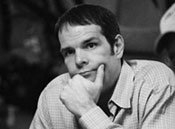
Player snapshot
| Full name | Howard Henry Lederer |
| Nickname | “The Professor” (also “Bub” / “Bubba”) |
| Nationality | American |
| Date of birth | October 30, 1964 (some sources list 1963) |
| Hometown | Concord, New Hampshire |
| Current base | Las Vegas, Nevada |
| Live tournament earnings | $6,582,745 (The Hendon Mob, verified June 2026) |
| WSOP bracelets | 2 (2000, 2001) |
| WPT titles | 2 (Season 1, 2002–2003) |
| Best live cash | $1,098,785 — 2008 Aussie Millions $100K |
| Playing style | Analytical, patient, mathematical |
| Status | Retired; largely withdrawn from public poker since 2016 |
Who is Howard Lederer?
Howard Lederer is the rare poker professional whose name now travels with an asterisk. For more than a decade he was one of the most respected strategic minds in the American game — a two-time World Series of Poker bracelet winner, a Season 1 World Poker Tour champion, and a teacher whose students included his own sister. Then he became, by wide agreement within the community, its most divisive figure. His live tournament earnings of $6,582,745 are verified, but the phrase most often typed into a search bar after his name is not “results.” It is “what happened.”
What happened was Full Tilt Poker. Lederer co-founded the site that, at its peak, was second only to PokerStars, and he became the public face of its management. When U.S. authorities shut it down on April 15, 2011 — the day poker still calls Black Friday — players discovered the site could not return the money in their accounts. Lederer’s reputation never recovered.
That arc, from “The Professor” to pariah, is what makes him one of the most instructive careers in the game’s history. This profile traces both halves honestly: the genuinely elite player and teacher who helped build modern tournament poker, and the executive whose name became shorthand for how badly it could go wrong.
Early life and path to poker
Lederer was born in Concord, New Hampshire, into a notably intellectual household — his father, Richard Lederer, is a well-known author and language popularizer. The family played cards on the living-room floor, but the young Lederer’s first competitive obsession was chess. After high school he moved to New York City and enrolled at Columbia University, drawn as much by the city’s famous chess scene as by the classroom.
He never finished the degree. In the back rooms of New York’s chess clubs he found poker, and at the legendary Mayfair Club he found a circle of players who would shape the modern game. There, through the 1980s, he learned alongside future Hall of Famers including Erik Seidel and Dan Harrington, as well as longtime pro Steve Zolotow. By his own and others’ accounts he was a losing player at first; the analytical reputation came later, earned over years of study.
One relationship from this period matters more than any tournament result: Lederer taught his younger sister, Annie Duke, how to play. She would go on to win a WSOP bracelet and millions in earnings, making the siblings one of poker’s most accomplished pairs — and giving “The Professor” nickname a literal grounding. In 1993 he relocated to Las Vegas to pursue the game full time.
Career timeline and breakthrough
Lederer’s tournament record built slowly. He first tried to qualify for a WSOP event in 1986 without success, then made a statement the very next year by finishing fifth in the 1987 WSOP Main Event — a deep run that announced him as a serious player long before he was a champion. Through the 1990s he was primarily a high-stakes cash-game specialist who happened to cash at the World Series, reaching eight WSOP final tables between 1993 and 1999 without quite closing one out.
The breakthrough came at the turn of the decade. In 2000 he won his first bracelet in the $5,000 Limit Omaha Hi-Lo event for $198,000, and in 2001 he added a second in the $5,000 No-Limit Deuce to Seven Draw, defeating Freddy Deeb heads-up for $165,870.
His career peak followed on the new World Poker Tour. In November 2002 Lederer won the WPT World Poker Finals at Foxwoods for roughly $345,400 — his first WPT title — and went on to win the PartyPoker Million later that season, a run that earned him the inaugural WPT Player of the Year award. Three Bellagio Five-Star World Poker Classic titles across 2003 and 2004 cemented his standing as one of the most feared tournament players of the era. His single biggest cash arrived in 2008, when he won the $100,000 buy-in event at the Aussie Millions for $1,098,785.
The final notable result of his playing career was a fitting near-miss: a runner-up finish in the 2010 WSOP Tournament of Champions, worth $250,000, behind Huck Seed. By then Lederer’s attention — and his legacy — had long since shifted from the felt to the boardroom.
Key titles and biggest results
| Event | Year | Finish | Prize | Notes |
|---|---|---|---|---|
| Aussie Millions $100K No-Limit Hold’em | 2008 | 1st | $1,098,785 | Biggest career cash |
| WPT World Poker Finals (Foxwoods) | 2002 | 1st | ~$345,400 | First WPT title; sparked Player of the Year run |
| WSOP $5,000 Limit Omaha Hi-Lo | 2000 | 1st | $198,000 | First WSOP bracelet |
| WSOP $5,000 No-Limit Deuce to Seven Draw | 2001 | 1st | $165,870 | Second bracelet; beat Freddy Deeb heads-up |
| WSOP Tournament of Champions | 2010 | 2nd | $250,000 | Lost to Huck Seed |
| PartyPoker Million | 2003 | 1st | ~$264,000 | Second WPT title (figure approx.; sources vary) |
| WSOP Main Event | 1987 | 5th | — | Career-launching deep run |
Collectively, these results describe a genuine all-around tournament force rather than a one-format specialist: a limit-Omaha bracelet, a deuce-to-seven bracelet, no-limit hold’em WPT titles and a pot-limit Omaha win. Lederer was, above all, a cash-game player who proved he could win across disciplines when he chose to enter tournaments — which is exactly the profile his peers respected most.
Playing style and strategic identity
The “Professor” nickname was not marketing. Lederer’s game was built on patience, position and a willingness to fold strong-looking hands when the math no longer supported them — an approach that, in the pre-solver era, read as almost academic at a table full of feel players. His chess background showed in his deliberate tempo and his habit of thinking several decisions ahead rather than reacting to the current street.
He was also, crucially, a teacher in temperament. The same instinct that made Annie Duke a champion turned Lederer into one of poker’s most prolific instructors during the boom: he produced the instructional video Secrets of No Limit Hold’em, contributed to strategy collections, ran a poker “fantasy camp,” and provided televised commentary and analysis for shows such as Poker Superstars and Learn from the Pros. Where many great players could win but not explain, Lederer could do both, and that ability to articulate the game cleanly is a large part of why his fall hit the community so personally.
His cash-game pedigree ran as deep as his tournament record. Lederer was a fixture in Las Vegas’s biggest games and was among the elite professionals — collectively nicknamed “The Corporation” — who took on Texas banker Andy Beal in the nosebleed heads-up matches later chronicled in Michael Craig’s book The Professor, the Banker, and the Suicide King. When peers from Doyle Brunson‘s generation listed the toughest no-limit players alive, Lederer’s name reliably came up.
Beyond the felt: Full Tilt Poker
Lederer’s most consequential work happened away from the table. In 2004 he was a founder and board member of Tiltware, the company behind Full Tilt Poker, alongside fellow pro Chris Ferguson and CEO Ray Bitar. Marketed around its stable of star pros, Full Tilt grew into the second-largest online poker room in the world and a defining engine of the poker boom.
That success is inseparable from what came next. As a founder, director and sponsored face of the brand, Lederer was the figure many players associated most closely with the company — which is why, when it collapsed, he absorbed the most blame.
Controversies and complex reputation
On April 15, 2011, the U.S. Department of Justice unsealed indictments against the major offshore poker sites serving the American market, shutting down Full Tilt Poker, PokerStars and Absolute Poker on charges including bank fraud and illegal gambling. The day became known as Black Friday. In the months that followed, the DOJ amended its civil complaint to allege that Full Tilt had operated, in effect, as a Ponzi-like scheme: it owed players hundreds of millions of dollars it no longer had, having credited online balances that were not fully backed by segregated funds while insiders drew large distributions.
The civil action named Lederer personally. The government pursued $42.5 million — the sum it said he had been paid through his involvement with the company. In December 2012 he settled, forfeiting assets reported at more than $2.5 million, including Las Vegas real estate, a 1965 Shelby Cobra and cash, while admitting no wrongdoing. Separately, PokerStars reached its own settlement with the DOJ, acquired Full Tilt’s assets and ultimately repaid the players who had been owed money — a resolution widely credited with sparing American players a total loss.
For the poker community, the settlement did not settle anything. Lederer became, in the words of many players, the most resented figure in the game. Resentment deepened with “The Lederer Files,” a lengthy 2012 PokerNews interview in which he gave his account of the collapse and was widely seen as deflecting responsibility. It was not until May 2016 that he issued a public apology, published on Daniel Negreanu’s website, in which he took “full responsibility” for the failure to protect player deposits. Reaction was mixed: some accepted it, while many felt it came five years too late and still shifted blame onto the period after he stepped back from day-to-day operations in 2008.
Days later, Lederer attempted a return to live play at the 2016 WSOP, registering for the $10,000 Deuce to Seven Lowball Championship. He was met with open hostility from other players and largely withdrew from the public poker world afterward. Approached for comment by reporters, he declined, saying only that he had made his statement.
It is worth stating clearly, in fairness to the full record: Lederer was never criminally charged or convicted in connection with Full Tilt; his case was a civil matter resolved by settlement without an admission of guilt. What is not in dispute is the human cost — players who could not access their own money for an extended period — and the fact that Lederer, as the brand’s most visible insider, became its lightning rod.
Current status and what to watch
As of 2026, Howard Lederer remains effectively retired and out of public view. His last recorded live cash dates to early 2011, and his brief 2016 return is widely regarded as his final appearance on the tournament scene. He continues to live in Las Vegas, and his $6,582,745 in live earnings has not changed in years.
His name, however, still surfaces. The 15-year anniversary of Black Friday in April 2026 prompted a fresh round of retrospectives across poker media re-examining how a single day reshaped the industry — and Lederer’s role in it. For a poker fan, the thing to watch is not a comeback, which appears extremely unlikely, but the longer question his career poses: whether poker’s collective memory ever softens toward “The Professor,” or whether his story remains the cautionary tale the community tells about trust, oversight and the people it chooses to put on the felt.
Frequently asked questions
Lederer has $6,582,745 in verified live tournament earnings, according to The Hendon Mob (as of June 2026). That figure covers live tournaments only; it does not include cash-game or online results, which are private. His career-best single cash was $1,098,785 at the 2008 Aussie Millions.
There is no reliable figure. Net worth for poker players is inherently speculative because cash-game and online winnings are not public, and Lederer has been out of the public eye for over a decade. Some websites estimate figures as high as $60 million, but none cite a credible source. What is documented is that the DOJ said Full Tilt paid him about $42.5 million over his involvement, and that he forfeited assets reported above $2.5 million in his 2012 civil settlement. Any specific net-worth number should be treated as an unverified estimate.
Lederer co-founded Full Tilt Poker, which U.S. authorities shut down on Black Friday in 2011 amid allegations that it could not repay players. He settled a civil case with the DOJ in 2012 without admitting wrongdoing, issued a public apology in 2016, and was met with hostility when he briefly returned to the WSOP that year. He has remained largely withdrawn from public poker ever since.
Two. He won the $5,000 Limit Omaha Hi-Lo event in 2000 and the $5,000 No-Limit Deuce to Seven Draw event in 2001. He also has dozens of other WSOP cashes and a runner-up finish in the 2010 Tournament of Champions.
Analytical, patient and mathematical — the qualities that earned him the nickname “The Professor.” A chess player before he was a poker player, he favored disciplined, position-aware play and was equally respected as a teacher and televised analyst.
He was born in Concord, New Hampshire, moved to New York City to attend Columbia University, and relocated to Las Vegas in 1993 to pursue poker full time. He is American and still based in Las Vegas.
Yes — two notable sisters, in fact. He taught his younger sister, professional player Annie Duke, who became a WSOP bracelet winner in her own right. Another sister, Katy Lederer, is a poet and author who wrote the family memoir Poker Face: A Girlhood Among Gamblers.