Eskimo Clark

Leave a Reply

Leave a Reply

Your email address will not be published. Required fields are marked *

Eskimo Clark: Professional Poker Player Profile
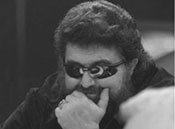
Player Snapshot

CategoryDetails
Full NameRobert Paul Clark
NicknameEskimo
NationalityUnited States
Date of BirthJune 2, 1947
Date of DeathApril 15, 2015
HometownStockton, Missouri (raised in Louisiana, based in Las Vegas)
Live Tournament Earnings$2,719,182 (source: Hendon Mob, verified May 2026)
WSOP Bracelets3 (1992, 1999, 2002)
WPT Titles0 (1 final table)
EPT Titles0
Other Major TitlesBellagio Five Diamond World Poker Classic (2003)
Known Playing StyleStud specialist, patient, disciplined
Sponsors/TeamNone
Career StatusDeceased (2015)

Who Was Paul “Eskimo” Clark?

Paul “Eskimo” Clark finished in the top 10 on poker’s money list nine out of ten years during the 1990s, a consistency record few players have matched in any era. The bearded, stoic Vietnam veteran became the first player to win WSOP bracelets in seven-card stud, razz, and stud high-low — a record that stood alone until Jeffrey Lisandro matched it in 2009. But Clark’s legacy extends beyond hardware: he’s credited with introducing badugi poker to North America after learning the game during his military service in Southeast Asia.

Clark grew up in Stockton, Missouri, one of seven siblings, and served as a medic during the Vietnam War. He accumulated $2,719,182 in live tournament earnings across 174 recorded cashes, with $632,005 of that total coming from 20 WSOP cashes and 3 bracelets. His career reached its commercial peak in 2004 when he finished runner-up to Mike Kinney in the World Poker Tour World Poker Challenge in Reno for $310,403 — his single largest score.

Early Life and Path to Poker

Robert Paul Clark was born on June 2, 1947, in Stockton, Missouri, the son of George and Ella (Martin) Clark, and grew up as one of seven children. Before poker became his profession, Clark enlisted in the Vietnam War, where he worked as a medic. It was during his service in Southeast Asia that Clark first encountered poker in serious form—and, according to multiple accounts, learned a lowball variant called badugi that would later become his cultural contribution to American card rooms.

The nickname “Eskimo” came not from heritage but from appearance. Many of his friends believed his facial features closely matched the logo used by Alaska Airlines, which featured an Inuit design. The heavily bearded, bearlike Clark embraced the moniker, and it stuck for life.

After returning from Vietnam, Clark spent time in New Orleans before eventually settling in Las Vegas. His first-ever cash came in the 1988 World Series of Poker when he finished eighth in Event #5: $1,000 Limit Omaha for $4,560. He would cash again in 1989, placing eighth in a razz event, but it wasn’t until the early 1990s that his career truly ignited.

Career Timeline and Breakthrough

Paul Clark’s tournament career followed a patient build typical of cash-game players who occasionally entered tournaments. His first significant result came in 1990, when he cashed in seven events across Los Angeles and Las Vegas for over $70,000, including a second-place finish in a limit seven-card stud event worth $49,800 at the Hall of Fame Poker Classic.

The breakthrough — 1992 WSOP: In 1991, Clark won his first gold bracelet when he took down Event #14: $5,000 Limit Seven-Card Stud for $122,000, defeating Ray Rumler heads-up. This was no soft field; stud events in the early 1990s attracted specialists who had been grinding the game for decades. Clark’s win announced him as a player who belonged at the upper tier of the stud world.

1990s dominance: What followed was a decade of remarkable consistency. Clark finished in the top 10 on poker’s money list nine of the ten years during the 1990s—an achievement that speaks to steady excellence in an era when tournament poker was far more cash-game-adjacent than it is today. He wasn’t chasing variance; he was grinding profitably year after year.

Completing the stud trifecta: Clark captured his second bracelet in 1999 WSOP Event #2: $1,500 Razz for $84,610, defeating Simon Zhang heads-up. His third and final bracelet came in 2002 when he won a $1,500 Limit Seven Card Stud High-Low tournament for $125,000, surviving Andrew Prock in heads-up play. With that win, he became the first player in WSOP history to win bracelets in all three seven-card stud variants—a record of specialized mastery that wouldn’t be matched until Jeffrey Lisandro accomplished the same feat in 2009.

Peak year — 2003-2004: In 2003, Clark won the $1,500 No Limit Hold ’em event of the Bellagio’s Five Diamond World Poker Classic, earning a $160,095 prize by defeating a final table including Erik Seidel, Chris Karagulleyan, Dave “Devilfish” Ulliott, Johnny Chan, and Huck Seed. That final table composition—a murderers’ row of poker Hall of Famers and world-class players—underscored that Clark could compete with anyone when the stakes mattered.

His biggest career cash came in 2004 when he finished runner-up to Mike Kinney in the World Poker Tour World Poker Challenge in Reno for $310,403. He would cash in four WPT events total, making one final table.

The 2007 turning point: During the 2007 WSOP $1,500 Razz event, Clark passed out three times while holding the chip lead. Medics believed he had suffered a series of mini-strokes. WSOP officials stopped the tournament. Paramedics put him on a gurney and used defibrillators. And then, hours later, according to WSOP Media Director Nolan Dalla, Clark was spotted outside the tournament area eating a full platter of chicken wings and chain-smoking cigarettes. He refused to quit the tournament and somehow managed to finish fourth for $31,186—his last WSOP cash.

Clark’s last recorded cash came on August 2, 2013, a $500 score. He passed away on April 15, 2015, in Las Vegas, at the age of 67. News of his death didn’t reach the wider poker community until June 2015, when poker pro Matt Salsberg inadvertently broke the news at the WSOP after making an “Eskimo Clark joke” at the tables.

Key Titles and Biggest Results

EventYearFinishPrizeNotes
WPT World Poker Challenge20042nd$310,403Biggest career cash; lost heads-up to Mike Kinney
WSOP $1,500 Stud Hi/Lo20021st$125,200Third bracelet; completed stud trifecta
WSOP $5,000 Seven Card Stud19921st$122,000First bracelet; defeated Ray Rumler heads-up
Bellagio Five Diamond $1,500 NLHE20031st$160,095Defeated final table with Seidel, Chan, Seed, Devilfish
WSOP $1,500 Razz19991st$84,610Second bracelet; defeated Simon Zhang
WSOP $1,500 Razz20074th$31,186Suffered mini-strokes mid-event, refused to quit
WSOP Main Event199719thDeep run in poker’s most prestigious event
WSOP Main Event199825thEliminated with pocket aces

These results reveal a player whose strength was in stud variants and whose peak years were the 1990s and early 2000s. Clark was not a one-hit wonder; he was a consistent performer who specialized in games that rewarded patience, memory, and disciplined fold equity. His three WSOP bracelets came in three different stud formats, demonstrating that he wasn’t exploiting a single game’s meta—he mastered an entire family of poker variants.

Clark gained a reputation for being dangerous in any variation of poker, but the numbers confirm what his peers knew: he was a stud specialist first, and everything else second.

Playing Style and Strategic Identity

Paul “Eskimo” Clark was a student of seven-card stud in all its forms—a game that punishes impulsive decisions and rewards players who can track exposed cards, calculate pot odds on fourth street, and recognize when an opponent’s board tells the truth. His insatiable love of the game was overflowing with tremendous skill—especially at all variations of Seven Card Stud—making him a remarkably difficult opponent to overcome.

Stud poker is a game of incomplete information where every exposed card matters. Players must remember which cards have been folded, adjust their hand ranges dynamically as the board develops, and make disciplined laydowns when their opponent’s visible holdings represent strength. Clark excelled at all of this. His three bracelets—in stud, razz, and stud hi/lo—required him to shift between high-hand thinking, low-hand construction, and split-pot strategy, often within the same tournament series.

Originally from New Orleans, Paul Clark calls Las Vegas his hometown. He has been a high-stakes cash game player for more than 25 years. Cash games were his primary income source; tournaments were an occasional excursion. This background shaped his style: patient, risk-averse in marginal spots, and willing to fold premium holdings when the board texture turned against him.

Clark was also known for a philosophical approach to variance. In a 2010 interview with Poker News Daily, when asked about bad beats, Clark replied: “There’s no such thing as a bad beat. I mean, if a guy pays for a card and gets the card, that’s it.” This wasn’t bravado—it was the mindset of a cash-game grinder who understood that poker is a long-term game where short-term results don’t define skill.

His quick wit and eccentric attitude was enjoyed by all around him, even if his stoic, bearded appearance suggested otherwise. Clark was as old-school as they come; he almost never did interviews and revealed very little about himself, other than to his closest friends.

Online Poker and Cash Games

Paul Clark was not an online poker player. His career predated the internet poker boom, and by the time online platforms like PokerStars and Full Tilt became dominant, Clark was already in his 50s and firmly rooted in Las Vegas cash games. No verified screen names or online results exist in public databases.

Clark has been a high-stakes cash game player for more than 25 years, according to CardPlayer.com. His reputation in Las Vegas card rooms—particularly Bellagio and Binion’s—was that of a steady, dangerous player in mixed games and stud variants. Cash games were his bread and butter; tournaments were the public-facing part of a much longer and more profitable grinding career.

Beyond the Felt

Badugi and poker history:
One of Clark’s most lasting contributions to poker has nothing to do with WSOP gold. The late American poker pro Paul “Eskimo” Clark is often credited with introducing badugi to the United States after learning it while serving as a medic in the Vietnam War. Badugi—a lowball draw game where the goal is to make the lowest four-card hand with no pairs and no repeated suits—likely originated in South Korea in the 1960s or 1970s, though its exact origins remain disputed.

Clark discovered badugi in the late 1960s in Vietnam while serving for the US military. He brought the game back to Las Vegas, where it was initially played at high stakes in mixed games and written on the board as “Padooki” or “Paldugi.” Some sources claim Clark invented the game himself, though most poker historians believe he learned it from Korean players during the war and introduced it to American card rooms in the 1980s.

Today, badugi is a fixture in high-stakes mixed games, appears in WSOP Dealer’s Choice events, and has its own $1,500 WSOP tournament. Whether Clark invented it or simply imported it, his role in bringing the game to North America is a genuine cultural contribution.

Personal life:
According to his obituary, Eskimo, who was cremated, is survived by three sisters—Nancy Cully, Judy Oberly, and Donna Burns—along with numerous nieces and nephews. Clark kept his personal life private. Outside of poker, Clark’s hobbies included baseball.

Personality and generosity:
Despite a reputation as a curmudgeon and reports of personal struggles, Clark was also known for generosity. In a 2011 comment on Poker News Daily, a player named Kelly recounted sitting with Clark in Binion’s coffee shop in the mid-1990s when friends of Kelly’s were going through financial hardship. According to Kelly, after hearing their story, Eskimo dug into his pocket and gave my friends $1,000 and said no need to ever pay it back, just hope it helps you out a bit.

Controversies and Complex Reputation

Paul Clark’s later years were marked by well-documented personal and financial struggles—realities that must be acknowledged without reducing his career to a cautionary tale.

Financial difficulties despite earnings:
Clark accumulated $2,719,182 in live tournament earnings, with significantly more earned in cash games. Yet by 2010, he was selling personal assets. In an auction that closed on Wednesday, the 1999 World Series of Poker bracelet won by Paul “Eskimo” Clark in a $1,500 Razz event fetched $4,050. The bracelet was listed by a seller with no prior eBay history and was located in Ireland, leading to speculation that Clark had already sold it privately before it appeared on the auction site.

Sadly, in his later years, Clark had become known for his apparent financial difficulties, despite a gross tournament yield of over $2.7 million since 1988, as well as for a dogged enthusiasm for seeking backers. The reasons for this are not fully documented, but the pattern is familiar in poker: high earnings do not always translate to long-term financial security, especially for cash-game players whose wins and losses are private.

Personal struggles:
His health began to fail and he seemed to be unwilling or incapable of looking after himself. There were reports of personal hygiene issues and physical decline in his final years. These are difficult realities, and they should be stated factually: Clark faced personal challenges that affected how he was perceived in his later career.

The 2007 WSOP incident:
During the 2007 WSOP $1,500 Razz event, Clark passed out three times while holding the chip lead. Medics believed he had suffered a series of mini-strokes. He refused to quit the tournament and finished fourth for $31,186. This was Clark’s last WSOP cash—a defiant, stubborn refusal to leave the table even when his health was clearly in crisis. It was both admirable and troubling, a reflection of a man who loved poker more than he cared for his own wellbeing.

Current Status and Legacy

Paul “Eskimo” Clark passed away on April 15, 2015, at his home in Las Vegas. He was 67 years old. News of his death did not become public knowledge until the 2015 WSOP was underway, when Matt Salsberg inadvertently revealed it after making an offhand joke at the tables.

Clark’s legacy rests on three pillars: his mastery of seven-card stud variants (a record that stood alone for seven years), his consistency throughout the 1990s (nine top-10 finishes on poker’s money list in a single decade), and his role in introducing badugi to North America. He was a player who belonged to an earlier era of poker—one where cash games were king, where stud variants dominated, and where a man could grind for decades without ever sitting for a televised interview.

For those who knew him, he was generous, eccentric, and stubborn. For those who played against him, he was dangerous. And for poker history, he was the first to conquer all three stud mountains—a specialist in a game family that rewarded memory, patience, and discipline.

FAQ

How much did Paul “Eskimo” Clark win in poker?

Paul Clark’s verified live tournament earnings total $2,719,182 according to the Hendon Mob database, with his last recorded cash on August 2, 2013. His WSOP earnings account for $632,005 of that total across 20 cashes. His biggest single cash came in 2004 when he finished runner-up in the World Poker Tour World Poker Challenge in Reno for $310,403. Clark was also a high-stakes cash game player for over 25 years, though those earnings are not publicly documented.

How many WSOP bracelets does Paul Clark have?

Paul Clark won 3 WSOP bracelets. His first came in 1991 when he took down Event #14: $5,000 Limit Seven-Card Stud for $122,000. He won his second in 1999 WSOP Event #2: $1,500 Razz for $84,610. His third came in 2002 WSOP Event #7: $1,500 Limit Seven-Card Stud Hi-Low for $125,200. Clark was the first player to win bracelets in seven-card stud, razz, and stud high-low, a record that was not matched until Jeffrey Lisandro in 2009.

What was Paul “Eskimo” Clark’s playing style?

Clark’s insatiable love of the game was overflowing with tremendous skill—especially at all variations of Seven Card Stud—making him a remarkably difficult opponent to overcome. He was a specialist in stud variants, which reward patience, card-tracking memory, and disciplined decision-making. Clark has been a high-stakes cash game player for more than 25 years and was known for a philosophical approach to variance. When asked about bad beats in 2010, Clark replied: “There’s no such thing as a bad beat. I mean, if a guy pays for a card and gets the card, that’s it.”

Where was Paul “Eskimo” Clark from?

Clark was born on June 2, 1947, in Stockton, Missouri, grew up in Louisiana, and spent his poker career based in Las Vegas, Nevada. Before turning to poker, Eskimo Clark was a veteran of the Vietnam War, where he worked as a dental assistant. The nickname “Eskimo” came from many of his friends believing his facial features closely matched the logo found upon Alaska Airlines, not from his heritage.

Is Paul “Eskimo” Clark still playing poker?

No. Paul “Eskimo” Clark passed away on April 15, 2015, in Las Vegas, Nevada, at the age of 67. His last recorded cash came on August 2, 2013, a $500 score. His last cash at the WSOP was in 2007 when he finished fourth in a $1,500 razz event, the same tournament where he suffered multiple mini-strokes but refused to quit.

Did Paul Clark invent badugi poker?

The origins of badugi are disputed. The late American poker pro Paul “Eskimo” Clark is often credited with introducing the game to the United States after learning it while serving as a medic in the Vietnam War. Clark discovered badugi in the late 1960s in Vietnam while serving for the US military and brought it to Las Vegas. Some accounts claim Clark invented the game, while others suggest he learned it from Korean players during the war. Most poker historians agree that Clark introduced badugi to North American card rooms in the 1980s, though whether he invented it or simply imported it remains unclear.

What happened to Paul Clark’s WSOP bracelet?

In an auction that closed on Wednesday, the 1999 World Series of Poker bracelet won by Paul “Eskimo” Clark in a $1,500 Razz event fetched $4,050. The auction took place in 2010. The bracelet was located in Ireland, leaving many to speculate that Clark had already sold the bracelet privately before it appeared on eBay. The sale occurred during a period when Clark was facing financial difficulties despite his $2.7 million in career tournament earnings.