Alan Goehring

Leave a Reply

Leave a Reply

Your email address will not be published. Required fields are marked *

Alan Goehring: Professional Poker Player Profile
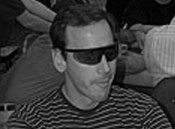
Snapshot

Full nameAlan Goehring
NationalityAmerican
Date of birthFebruary 21, 1962
HometownMilwaukee, Wisconsin
Current baseHenderson, Nevada
Live tournament earnings$5,362,240 (Hendon Mob, last cash 18 June 2025)
WSOP bracelets1 (2020 WSOP Online Event #8)
WPT titles2 (2003 WPT Championship; 2006 LA Poker Classic)
Best live cash$2,391,550 (2006 LA Poker Classic)
Playing styleAggressive; pioneer of the min-raise; polarising “any-two-cards” image
Sponsors / teamNone (unsponsored throughout his career)
Online screen nameGladiusIII (WSOP.com)

Who is Alan Goehring?

Alan Goehring is the first player ever to win a World Poker Tour Championship — and one of the few high-stakes pros whose career story is defined as much by a decade away from the felt as by what he did at it. A retired junk bond analyst from Milwaukee, Goehring took down the inaugural 2003 WPT Championship at the Bellagio for just over a million dollars, won the WPT LA Poker Classic in 2006 for a then-record $2,391,550, and then, by his own account, largely stopped playing poker to trade futures markets.

For two decades, the one trophy missing from his collection was a WSOP gold bracelet — a piece of hardware that came agonisingly close in 1999, when he finished runner-up to Noel Furlong in the WSOP Main Event. He finally got it in July 2020, winning the eighth event of the WSOP’s first online series under the screen name GladiusIII. He was 58. It had been 21 years since his last WSOP final table.

What makes Goehring worth a long look isn’t the headline results — though two WPT titles and an eight-figure live-tournament résumé would be enough on their own. It’s that he was using strategies in 2003 that today’s solvers and training sites consider standard, and that he treats poker as a hobby in a way that almost no top pro genuinely does.

Early life and path to poker

Goehring was born in Milwaukee, Wisconsin, on 21 February 1962. He spent the bulk of his pre-poker career on Wall Street, working as a junk bond analyst and trader through the 1980s and 1990s — a period when high-yield debt was at the centre of American finance and the stakes were genuinely enormous.

By his late thirties he had made enough money to step back from full-time trading. He turned to poker professionally at age 37, beginning to enter the largest live tournaments in the United States. He has lived in Henderson, Nevada — a suburb of Las Vegas favoured by working pros for its tax treatment and proximity to the Strip — for the bulk of his poker career.

The shift from bond markets to tournament poker is less unusual than it sounds. Both reward an ability to assess probability under pressure, to size positions correctly, and to remain emotionally disengaged from outcomes that include long losing streaks. Goehring has never been coy about the parallel: in a 2019 interview with Card Player on the rail of the WSOP Main Event, he described futures trading as “as close to gambling as you can get while still calling it investing,” and acknowledged with a laugh that he is “a little bit of a gambling addict.”

Career timeline and breakthrough

Goehring’s first significant tournament result came at the 1997 WSOP, where he finished third in the $3,000 No-Limit Hold’em event for $61,845. The final table that year included Kathy Liebert, Chris Ferguson, Donnacha O’D and Dan Harrington — a who’s-who of late-1990s tournament poker before the boom.

Two years later, in 1999, Goehring went one place better and one event bigger. He finished runner-up to Noel Furlong in the WSOP Main Event for $768,625. The final hand has passed into poker lore: Goehring held pocket sixes, Furlong held pocket fives, and Furlong flopped a five. It was a brutal way to lose the biggest tournament in the game, but it stamped Goehring as a player who could go deep in elite fields.

Several other near-misses followed — including a runner-up finish in Bellagio’s inaugural No-Limit Hold’em tournament — and Card Player magazine memorably labelled him the kind of player “who could not win the big one.” That tag was demolished in April 2003 at the inaugural WPT Championship at the Bellagio. From a field of 111 players paying $25,000 each, Goehring outlasted a final table that included Phil Ivey, Doyle Brunson, Ted Forrest and Russian heads-up specialist Kirill Gerasimov. He took the title and $1,011,886. He was, by definition, the first WPT World Champion.

The peak came less than three years later. In February 2006, Goehring won the WPT LA Poker Classic at [[Commerce Casino]] for $2,391,550 — at the time, the largest first-place prize in WPT history. He had two WPT titles and a major-WSOP runner-up in less than a decade.

Then he largely disappeared. From roughly 2008 through 2018 — a period that included the entire post-Black Friday landscape and the rise of GTO-influenced poker — Goehring barely played. He told Card Player in 2019 that 2018 had been a year in which he didn’t play “a single hand of poker,” instead spending the summer at a second home in Colorado and trading futures markets at unusual hours to follow Asian and European sessions.

He returned in 2019, made a deep run in the WSOP Main Event (93rd of 8,569 entrants), and a year later — without any live WSOP events possible because of the pandemic — entered the online WSOP series under the screen name GladiusIII. On 9 July 2020, he won Event #8, a $500 No-Limit Hold’em freezeout with 1,479 entries, beating Ross Gottlieb heads-up to take the $119,399 first prize and his first WSOP bracelet. Twenty-one years after the Furlong hand, he had finally won at the World Series.

Key titles and biggest results

EventYearFinishPrizeNotes
WPT LA Poker Classic ($10,000)20061st$2,391,550Then-WPT record first prize; 692 entries
WPT World Championship ($25,000)20031st$1,011,886First-ever WPT Championship winner; final table included Ivey, Brunson, Forrest
WSOP Main Event ($10,000)19992nd$768,625Lost heads-up to Noel Furlong
WSOP Online Event #8 ($500 NLH Freezeout)20201st$119,399First WSOP bracelet, screen name GladiusIII
WSOP $3,000 No-Limit Hold’em19973rd$61,845First major final table; alongside Liebert, Ferguson, Harrington, O’Dea
WSOP $10,000 NLH 6-Max201912th$36,151Return-to-poker run during 2019 WSOP

What the table shows, taken collectively, is that Goehring is not a volume grinder. He has 77 recorded live cashes across nearly three decades — many top tournament pros log that many in a single year. What he has is a remarkable hit rate when he chooses to enter major events, particularly $10,000+ buy-ins. Two of his four career outright tournament wins are WPT main-tour titles. That isn’t the résumé of a rounder; it’s the résumé of a selective tournament specialist.

Playing style and strategic identity

For most of the early 2000s, Goehring divided the poker community more sharply than almost any other elite player. The Hendon Mob biography on him, written by Keith “The Camel” Hawkins in October 2005, opens with the line: “It is doubtful there is another player in the world who divides opinion as sharply as Goehring. Many players think he is an absolute fish, while others consider him a genius.”

The reason for the divide was that Goehring played a wider preflop range than most of his contemporaries and was famously aggressive postflop — willing to put money in with hands other players considered marginal. He has been described by multiple poker writers as someone who will play “any two cards” in the right spot, and at the table he was rarely without a pair of oversized dark sunglasses.

The more interesting strategic point — and the one almost every existing profile of Goehring misses — is that he was an early proponent of the min-raise. Where most tournament pros in the WPT’s first seasons opened pots at three to five times the big blind, Goehring routinely opened at the minimum. He said in a 2020 interview that he viewed the min-raise as one of his “competitive advantages” during the 2003–2006 boom era, and that he expected it would become standard within a decade. He was right: it now is.

Equally Goehring-ish is his stated attitude to tournament structure. He has spoken on camera, including in a Card Player strategy video, about the importance of slow structures and deep stacks — a critique that was unusual in the mid-2000s and that has since become a near-universal complaint among professionals about smaller-buy-in events.

The label that ties this together is selective aggression: a player who picks his moments to enter tournaments at all, then plays a wider, more attack-oriented range than the field expects, with raise sizing designed to keep pots manageable and lay traps for opponents who overreact.

Online poker and cash games

Outside of the 2020 WSOP Online series, Goehring’s documented online footprint is small. His WSOP.com screen name is GladiusIII. He has occasionally mentioned in interviews that he enjoys lower-stakes online play more than the higher-buy-in live events, which is unusual for a player of his standing. He has not been a regular on the high-stakes streaming circuit (Hustler Casino Live, Live at the Bike, Triton), and Card Player’s bio on him notes he is “a tournament player” who does not chase local cash games.

Beyond the felt

Goehring has never been sponsored. He has no training site, no book, no podcast, no Twitch stream, no merchandise. In an era when most top players run some form of personal brand operation, his public footprint is unusually thin — and apparently intentionally so.

His one well-documented outside activity is trading. Goehring made his money in the 1980s junk-bond market, retired comparatively young to play poker, and since around 2008 has spent most of his time trading futures. He has framed this not as a retreat from poker but as a switch to a market he finds more challenging and, in his words, more rewarding in scale.

There is no public charity profile, no business venture in poker training, no television appearance trail beyond his two WPT final tables and the 1999 WSOP Main Event ESPN broadcast. For a two-time WPT champion, that is genuinely unusual — and itself part of the story.

Current status and what to watch

Goehring is still active in poker, but in the same selective way he has been throughout his career. Hendon Mob records show small WSOP cashes in both June 2024 ($3,783) and June 2025 ($3,010), suggesting he continues to enter at least a handful of summer-series events. Now 64, he has shown no public sign of fully retiring from the game.

The thing to watch over the next 12 months is straightforward: whether he plays the 2026 WSOP at the Horseshoe and Paris in any volume, and whether he enters another WPT main event — particularly a return to the LA Poker Classic, the tournament that gave him his biggest career score. Twenty years on from that 2006 win, even a deep cash would re-establish him as one of the most decorated WPT players still active.

FAQ

How much has Alan Goehring won in poker?

Goehring has more than $5.36 million in recorded live tournament earnings (Hendon Mob, as of his 18 June 2025 cash). Card Player, which includes online events with confirmed real-name results, lists him at $5,537,319 across 82 cashes.

How many WSOP bracelets does Alan Goehring have?

One. He won his first and only WSOP bracelet on 9 July 2020 in Event #8 of the 2020 WSOP Online series — a $500 No-Limit Hold’em freezeout — for $119,399, playing under the screen name GladiusIII. Despite a 1999 Main Event runner-up finish, it took him 21 years to win his first bracelet.

Did Alan Goehring win the WPT Championship?

Yes. Goehring won the inaugural WPT World Championship in 2003 at the Bellagio for $1,011,886, beating a final table that included Phil Ivey, Doyle Brunson and Ted Forrest. He won a second WPT title in February 2006 at the LA Poker Classic for $2,391,550, then a record first prize on the tour.

What is Alan Goehring’s playing style?

Aggressive and selective. He plays a wider preflop range than most tournament pros and was an early adopter of the min-raise as a standard opening size — a strategy he has said he viewed as one of his “competitive advantages” during the WPT’s early years. He is also known for wearing oversized dark sunglasses at the table.

Where is Alan Goehring from?

Goehring was born in Milwaukee, Wisconsin, on 21 February 1962, and has lived in Henderson, Nevada, throughout his poker career. He worked as a junk bond analyst and trader on Wall Street before turning professional at age 37.

Is Alan Goehring still playing poker?

Yes, although selectively. After a long step back from the live circuit between roughly 2008 and 2018 to trade futures markets, Goehring returned to play the 2019 WSOP Main Event (finishing 93rd of 8,569 entrants) and won his first bracelet in the 2020 WSOP Online. He has continued to record small WSOP cashes in 2024 and 2025.

Did Alan Goehring really lose the WSOP Main Event with the better hand?

In the final hand of the 1999 WSOP Main Event, Goehring held pocket sixes and Noel Furlong held pocket fives — Goehring was a heavy favourite preflop. Furlong flopped a five, and Goehring was eliminated in second place for $768,625.