John Juanda

Leave a Reply

Leave a Reply

Your email address will not be published. Required fields are marked *

John Juanda: Professional Poker Player Profile
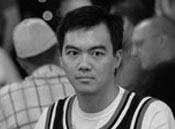
Player snapshot

  • Full name: Johnson “John” Juanda
  • Nationality: Indonesian (Chinese-Indonesian, Hoklo heritage)
  • Date of birth: 8 July 1971
  • Hometown / current base: Born in Medan, North Sumatra; based in Tokyo, Japan, per Wikipedia (Hendon Mob still lists Marina del Rey, California as residence)
  • Live tournament earnings: $26,543,392 (Hendon Mob, latest cash dated 13 March 2026)
  • All-time money list rank: 47th globally; 1st on the Indonesia all-time list
  • WSOP bracelets: 5
  • WPT titles: 0 (seven WPT final tables per Wikipedia, including a 2002–03 Five Diamond runner-up)
  • EPT titles: 1 (2015 EPT Barcelona Main Event)
  • Other major titles: 2001 World Poker Open Championship; 2004 inaugural Professional Poker Tour event; 2006 Crown Australian Poker Championship A$100K Speed Poker; 2017 Triton Super High Roller Series Macau Main Event
  • Hall of Fame: Inducted 2015 (with Jennifer Harman)
  • Known playing style: Patient, observational, position-aware, mixed-game versatile
  • Sponsors / team: None current; formerly a founding member of Team Full Tilt Poker (2004–2011)
  • Online screen name: LuckBox (Full Tilt Poker)

Who is John Juanda?

For more than two decades, John Juanda has been the quietest man at the biggest tables in poker. He does not trash-talk. He does not wear sunglasses indoors. He rarely gives long interviews. And yet, when Hendon Mob last updated his file in March 2026, he sat 47th on the all-time live tournament earnings list with $26,543,392 across 301 recorded cashes — one of only a few dozen players in history to cross $26 million in live winnings.

The tension between those two facts — invisible presence, elite résumé — is the Juanda story. Daniel Negreanu summed it up in a blog post in the late 2000s, calling Juanda perhaps the most underrated superstar in poker, and arguing that on pure tournament consistency, Juanda was the best bet in the world to make a final table. Nearly 20 years later, the assessment still holds. Juanda is a five-time WSOP bracelet winner, an EPT Barcelona Main Event champion, a Triton Macau Main Event champion, and a 2015 Poker Hall of Fame inductee. If you handed that résumé to a poker fan without a name attached, they would place it alongside the canonical greats.

What separates Juanda from the rest of that company is range. He has won a limit ace-to-five triple draw bracelet, a seven card stud hi-lo bracelet, a pot-limit Omaha bracelet, a no-limit hold’em main event bracelet at WSOP Europe, and a 2-7 no-limit single draw championship — a spread that maps almost perfectly onto the traditional mixed-games rotation. He has cashed in three different decades, on four continents, against every generation of professional, from Doyle Brunson’s era through the modern solver-trained high-roller pool.

Early life and path to poker

Juanda was born on 8 July 1971 in Medan, North Sumatra, the first of four children in a Chinese-Indonesian family of Hoklo heritage. His father was a gambler who drank and lost, and who warned his son off the habit — a warning the younger Juanda largely ignored, even in elementary school, where, as he has told several interviewers over the years, he gambled on marbles with classmates. Through his teenage years he redirected that competitive drive into athletics, becoming a high school track star across distances from the 200-metre sprint to the 5,000-metre.

In 1990, aged 19, Juanda flew from Indonesia to the United States to enrol at Oklahoma State University. According to the biography page on his Hendon Mob profile and subsequent interviews, it was on that flight that a friend first taught him the rules of poker. He graduated from OSU with a double major in marketing and management, then moved to Washington State for an MBA at Seattle University. To fund his studies he worked a remarkable combination of side jobs — including a stint as a stockbroker and, famously, a door-to-door Bible salesman, despite being a lifelong Buddhist.

The turning point came on the weekends. Between classes, Juanda started visiting card rooms near Seattle, learning limit hold’em and the mixed games the locals played for low stakes. By the time he completed his MBA in 1996, he had built a bankroll entirely from poker winnings. He has said in interviews with Seattle University’s own magazine and with ESPN that he bought into his first game with a single $100 bill and never had to replenish it from outside money. That detail — never going broke, never reloading — becomes important later when his peers start comparing bankrolls.

Career timeline and breakthrough

Juanda entered his first professional tournaments in 1997 in Los Angeles, cashing repeatedly in small buy-in events on the West Coast circuit. His first recorded WSOP cash came in 1999 at age 27, a ninth-place finish in the $1,500 Limit Hold’em event for $14,615, followed a week later by a seventh-place finish in the $3,000 Limit Hold’em event at a final table that included Howard Lederer and Humberto Brenes. It was not a breakthrough, but it was a signal — a rookie mixed-game player hanging with the established limit crowd.

The breakthrough arrived at the 2001 World Poker Open Championship in Tunica, which he won outright. The following summer came the 2002 WSOP, and with it his first gold bracelet: the $1,500 Limit Ace-to-Five Triple Draw Lowball for $49,620 on 27 May 2002. Two weeks later he finished runner-up to Gus Hansen at the WPT Five Diamond World Poker Classic for $278,240. He was named WSOP Tournament Champion of the Year and finished runner-up in the Card Player Player of the Year race in both 2001 and 2002.

In 2003 he added two more bracelets inside a single fortnight: the $2,500 Seven Card Stud Hi-Lo 8-or-Better on 11 May for $130,200, and the $2,500 Pot-Limit Omaha with Rebuys on 16 May for $203,840. By the end of 2003, aged 31, he was a three-time WSOP bracelet winner already being discussed as one of the most complete tournament players of his generation — alongside friends Phil Ivey, Daniel Negreanu, and Allen Cunningham, with whom he had come up in the late-90s Los Angeles cash game scene.

Juanda’s peak period commercially coincided with the 2004 launch of Full Tilt Poker, which he co-founded with a group that included Ivey, Lederer, Chris Ferguson, Erik Seidel, Erick Lindgren, Phil Gordon, Clonie Gowen, and Andy Bloch. As a founding shareholder — reportedly the second-largest stakeholder, according to Full Tilt reporting — he represented the site in live events under the LuckBox handle and appeared regularly on televised cash-game and tournament shows throughout the poker-boom years.

The single defining live result of that era came on 3 October 2008 in London, when Juanda won the WSOP Europe £10,000 Main Event for £868,800 (approximately $1.58 million). The final table lasted 22 hours and 434 hands, which PokerNews documents as the longest final table in World Series history. Juanda outlasted Ivan Demidov, Daniel Negreanu, and eventually Stanislav Alekhin heads-up — an endurance performance that matched his track background and his reputation for not tilting under fatigue.

The years immediately after were turbulent. On 15 April 2011 — “Black Friday” — the U.S. Department of Justice indicted Full Tilt’s operators and shut the site down in the United States. The company was later found to be unable to repay player balances and was eventually acquired by PokerStars in 2012. Juanda was not named in the indictments or accused of financial wrongdoing, but as a founding shareholder he lost his equity stake alongside the other owners. Two months after Black Friday he answered with his fifth WSOP bracelet, winning the $10,000 2-7 Draw Lowball Championship for $367,170 in a heads-up match against Phil Hellmuth on 12 June 2011.

What followed was a gradual geographic and structural pivot. Juanda relocated to Tokyo, reduced his Las Vegas schedule, and began targeting the emerging Asian high-roller circuit. He finished fifth in the 2012 Macau High Stakes Challenge HK$2 million Super High Roller for $1,645,756, then spent the middle part of the decade mixing Macau, Melbourne, and selective European stops. In August 2015 he won the EPT Barcelona Main Event for €1,022,593 after a deal — the largest EPT Main Event field in tour history at that point, with 1,694 entries. Three months later, on 6 November 2015, he was inducted into the Poker Hall of Fame at Binion’s Gambling Hall alongside Jennifer Harman.

His career-best live cash came on 29 November 2017 at the Triton Super High Roller Series in Macau, where he won the HK$1 million Main Event for HK$22,410,400 — $2,870,092. It remains his largest single result.

Since 2017 Juanda has played a reduced but still highly selective schedule. He continues to cash at WSOP events (93 career WSOP cashes accounting for roughly $5.4 million of his earnings, per Wikipedia) and is a fixture at major Asian festivals including Triton, the Asian Poker Tour, and Poker Dream. In 2025 alone he won two titles: the Poker Dream 16 Jeju $15,000 NLH Superstar Challenge in February for $270,350, and the APT Taipei Single Day High Roller in April for approximately $110,401. His most recent recorded Hendon Mob cash — a $28,500 finish — is dated 13 March 2026.

Key titles and biggest results

The following results are sourced from Hendon Mob, PokerNews, and the official WSOP and EPT databases. All figures are live tournament prize money.

EventYearFinishPrizeNotes
Triton Super High Roller Series Macau, HK$1M Main Event20171st$2,870,092Career-best live cash
Macau High Stakes Challenge, HK$2M Super High Roller20125th$1,645,756First seven-figure Asian result
WSOP Europe, £10,000 Main Event (London)20081st$1,580,0964th bracelet; longest WSOP/E final table in history (22 hours, 434 hands)
EPT Barcelona, €5,300 Main Event20151st$1,164,034 (€1,022,593)Largest EPT Main Event field ever at the time (1,694 entries)
EPT London, £5,000 Main Event20102nd$852,868Lost heads-up to David Vamplew
Crown Australian Poker Championship, A$100K Speed Poker20061st$732,901 (A$1M)Defeated a final table including Phil Ivey
WSOPE, €50,000 Majestic High Roller (Cannes)20122nd~$755,000 (€600,000)
EPT London, £20,000 High Roller20082nd$598,770Lost heads-up to Jason Mercier, week after WSOPE win
WSOP $10,000 2-7 Draw Lowball Championship20111st$367,1705th bracelet; heads-up vs Phil Hellmuth
Five Diamond World Poker Classic, $10K NLH20022nd$278,240Lost heads-up to Gus Hansen

What these results collectively say is straightforward: Juanda is not a one-hit wonder, nor a tournament specialist in a single variant. He is a generalist who has made final tables in limit, no-limit, pot-limit, stud, triple draw, single draw, and short-deck formats, across Las Vegas, London, Melbourne, Macau, Barcelona, Monte Carlo, Cannes, Manila, Taipei, and Jeju. The five biggest scores on his Hendon Mob come from four different continents. Among players with 25+ year careers, that geographic and format spread is rare.

Playing style and strategic identity

Juanda’s table image is built on three overlapping elements: stillness, positional discipline, and observational depth.

Stillness first. Peers and commentators from Negreanu downward have described him as one of the calmest players in the game. He attributes this explicitly to his Buddhist practice, and has told Seattle University — in a quote that has been repeated widely in poker media — that he tries his hardest to win but respects everyone he plays with and does not get upset when he loses. That calm is not passivity; it is what allows him to sit for 22 hours at a WSOPE final table, as he did in 2008, without the unforced errors that cost tired opponents.

Positional discipline is the second layer. In his 2015 EPT Barcelona run, which Upswing Poker broke down in detail, Juanda’s winning pattern was a deep-stacked, positional game where he applied pressure in late position once short-stack dynamics arrived near the money. He has told interviewers on several occasions — including a post-victory interview at Poker Dream Jeju in February 2025 — that his strategy shifts dramatically with stack size: patient when short, aggressive when deep and near in-the-money or final-table pay jumps.

Observational depth is the third, and possibly the most distinctive, element. When Juanda arrived in the United States in 1990 he spoke little English, which he has described in profiles by Pokerlistings and GGPoker as a formative constraint: he had to read people’s body language before he could reliably read their words. That extended practice in nonverbal observation translated directly into live poker. His reputation among peers in the 2000s was that he could hand-read deep with very little information. More recently, in the Asian high-roller era, that skill has adapted to fields where many opponents are themselves from unfamiliar poker cultures — a situation where baseline reads matter more than exploitative assumptions.

Where he sits on the GTO-versus-intuition axis is interesting. Juanda came up decades before solvers existed and is unusual among older pros in that he rarely discusses GTO-based preparation in interviews. His public framing is closer to old-school: play your stack, read your opponent, manage variance. But his sustained results in modern high-roller fields — where he has repeatedly cashed alongside solver-trained pros like Daniel Dvoress, Wai Kin Yong, and Dan Cates — suggest either that his intuitive game has held up remarkably well or that he has quietly integrated modern frequencies. He does not publicise his preparation either way.

One analysable hand often referenced in coverage of his style is from the 2019 Triton Montenegro HK$250,000 Short Deck event, in which Juanda — holding sixes full of aces on a paired board against Sergey Lebedev — check-raised turn and eventually folded quads on the river to a small lead-out. Upswing’s Mike Brady broke the hand down in 2020 as an example of Juanda over-folding in short-deck against unfamiliar pressure, which is itself informative: his discipline sometimes tips past optimal into conservative.

Online poker and cash games

Juanda’s online era ran from roughly 2004 to 2011, the lifespan of Full Tilt Poker before Black Friday. He played under the screen name LuckBox (his Twitter handle remains @LuckBoxJuanda) and was a regular in Full Tilt’s high-stakes no-limit and mixed-game cash pools, including the sessions that populated televised shows like High Stakes Poker and Poker After Dark. He was a founding shareholder of the site, not merely a sponsored face; reporting at the time of Black Friday described him as the second-largest individual shareholder behind Ferguson.

A widely circulated hand from that era, broken down by Doug Polk on YouTube, saw Juanda play a $678,000 pot against Tom Dwan at the $500/$1,000 no-limit cash tables on Full Tilt — representative of the stakes he routinely played online during the site’s peak.

Post-Black Friday, with US-facing online poker largely closed and his Full Tilt equity wiped out, Juanda gradually shifted his cash-game activity to live high-stakes pools in Macau and, periodically, the Triton private cash events that accompany the series’ festivals. He has not been a fixture on streamed cash shows like Hustler Casino Live, preferring unrecorded games consistent with his low-public-profile preferences.

Beyond the felt

Juanda has never held a long-term ambassador contract since Full Tilt’s collapse. Unlike Ivey, Hellmuth, or Negreanu, he has no signature patch, training site, or streaming presence. He has not written a strategy book. He has not launched a coaching platform. His commercial footprint outside the felt is deliberately narrow.

What he has done is operate an Indonesian-themed restaurant called Java Spice in Rowland Heights, California — reported as his primary outside-poker business investment, at least during his US-based years. He also serves as an ambassador for Raising for Effective Giving (REG), the poker-community charitable organisation that encourages pros to donate a percentage of tournament earnings to high-impact causes.

The one widely reported personal episode that broke the pattern came in late 2014. At a Christmas party, Juanda and a friend — having, in Juanda’s own framing at a 2015 PokerNews interview, had “maybe a little too much to drink” — made a series of physical prop bets for the following year. The headline wager required Juanda to complete 20 Marine Corps-style pull-ups within six months, starting from a baseline where he could manage six. The other bets involved running. Juanda essentially took a year off poker to train, and completed 22 pull-ups against the 20 target. He also won the running bets. The side story is that he returned to the tournament circuit in August 2015 and promptly won EPT Barcelona — a coincidence his interviewers pressed him on repeatedly. Juanda later ran the same pull-up bet in reverse in 2019, reportedly taking $25,000 from high-stakes pro Max Silver, who failed to hit the 20 target over a year and whose loss Juanda donated to charity.

Publicly documented personal life is minimal by choice. Profiles dating back to the mid-2000s describe him as single or private about his personal life; more recent coverage indicates he is married with children, based on his own occasional social media posts. He has repeatedly declined to discuss his family in interviews, a position this profile respects.

Controversies and complex reputation

Two complicated entries require mention.

The first is Juanda’s role as a founding shareholder of Full Tilt Poker, which the U.S. Department of Justice shut down on Black Friday, 15 April 2011. The New York District Attorney’s office subsequently described the site’s operation as a Ponzi scheme in the sense that player balances had been used to cover operating expenses and executive payouts — not that players were cheated at the tables. Juanda was never indicted, never charged, and was not accused by either U.S. prosecutors or independent reporting of any financial wrongdoing. Reporting at the time suggested he was a “vocal owner” who clashed internally with CEO Ray Bitar over the site’s direction, but he was not involved in day-to-day operations. He lost his equity alongside the other shareholders when PokerStars acquired Full Tilt’s assets in 2012 and repaid players. Juanda has rarely discussed the episode publicly.

The second is the 2017 Super Bowl ticket Ponzi scheme involving poker player Ali Fazeli. According to court filings first reported by CardPlayer and subsequently covered by PokerNews and Card Player, Juanda, fellow Hall of Famer Erik Seidel, and high-stakes pro Zachary Clark collectively handed Fazeli $1.3 million to purchase and resell NFL Super Bowl tickets at profit through Fazeli’s company Summit Entertainment Group — Juanda’s share was $300,000. Fazeli never bought the tickets, instead using the funds to bankroll high-roller tournament entries and pay off casino markers. Juanda, Seidel, and Clark filed civil suit in Nevada in 2018. Fazeli subsequently pleaded guilty to wire fraud, admitting to defrauding investors of approximately $6.2 million, and was sentenced in 2019 to 18 months in federal prison with $7.5 million in ordered restitution. Juanda was a victim, not a participant.

Beyond these, Juanda has no significant on-felt controversies — no cheating allegations, no major table disputes, no public feuds.

Current status and what to watch

As of March 2026, Juanda is active but selective. He is based primarily in Tokyo, maintains a US address in California, and concentrates his schedule on the Asian festival circuit — Poker Dream in Jeju and Malaysia, APT stops in Taipei and Manila, Triton festivals at their Asian and European venues, and a handful of WSOP events each summer in Las Vegas. He continues to cash regularly at the WSOP, with his latest recorded Series cash dated 15 July 2025 for $9,932, and his most recent Hendon Mob cash of any kind dated 13 March 2026 for $28,500.

At age 54 he is not chasing Player of the Year races, but the two 2025 titles — Poker Dream Jeju in February and APT Taipei in April — demonstrate that his ability to win against a 60-to-230-entry field of competent professionals is fully intact. A sixth WSOP bracelet, bringing him level with Daniel Negreanu and Layne Flack, is the most obvious remaining individual milestone; a career $30 million in live earnings, which he is within striking distance of at $26.5 million, is the next round number. In the next 12 months, watch his Triton and WSOP Europe appearances — those are where a Hall of Famer of his pedigree is most likely to add to either figure.

FAQ

How much has John Juanda won in poker?

John Juanda has $26,543,392 in live tournament earnings across 301 cashes, according to his Hendon Mob profile as of his latest recorded cash on 13 March 2026. That figure covers live tournaments only and excludes cash games and online play. It places him 47th on the all-time global money list and first on the Indonesia all-time money list.

How many WSOP bracelets does John Juanda have?

John Juanda has five WSOP bracelets. He won the $1,500 Limit Ace-to-Five Triple Draw in 2002, the $2,500 Seven Card Stud Hi-Lo 8-or-Better in 2003, the $2,500 Pot-Limit Omaha with Rebuys also in 2003, the £10,000 WSOP Europe Main Event in London in 2008, and the $10,000 2-7 Draw Lowball Championship in 2011. The 2008 WSOPE Main Event remains the longest final table in WSOP or WSOP Europe history, lasting 22 hours and 434 hands.

What is John Juanda’s playing style?

John Juanda is a patient, observational, mixed-game specialist known for positional discipline and deep hand-reading. He has described his strategy as stack-size dependent: tight and conservative when short-stacked, aggressive and pressure-based when deep and near pay jumps. His calm table presence is widely attributed to his Buddhist practice and to the observational skills he developed learning English as a second language in the early 1990s.

Where is John Juanda from?

John Juanda was born in Medan, North Sumatra, Indonesia on 8 July 1971, into a Chinese-Indonesian family of Hoklo heritage. He moved to the United States in 1990 to study at Oklahoma State University and later earned an MBA from Seattle University. As of 2026, Wikipedia lists his current residence as Tokyo, Japan, while Hendon Mob still shows Marina del Rey, California — consistent with maintaining bases in both regions.

Is John Juanda still playing poker?

Yes, John Juanda remains an active tournament professional. In 2025 alone he won two titles — the Poker Dream Jeju $15,000 NLH Superstar Challenge in February for $270,350 and the APT Taipei Single Day High Roller in April for approximately $110,401. His most recent cash recorded on Hendon Mob is dated 13 March 2026. He concentrates his schedule on the Asian circuit (Triton, APT, Poker Dream) with selective WSOP appearances each summer.

Is John Juanda in the Poker Hall of Fame?

Yes. John Juanda was inducted into the Poker Hall of Fame on 6 November 2015, alongside Jennifer Harman, in a ceremony at Binion’s Gambling Hall in Las Vegas. They became the 49th and 50th members of the Hall. Juanda was 44 at the time of induction.

Did John Juanda win the WPT?

John Juanda has not won a World Poker Tour Main Tour title. According to Wikipedia, he has made seven WPT final tables, including a notable runner-up finish at the 2002–03 Five Diamond World Poker Classic, where he lost heads-up to Gus Hansen for $278,240. PokerNews lists him with six WPT final tables and 19 career WPT cashes.

What was John Juanda’s biggest poker win?

John Juanda’s largest single live cash is $2,870,092, earned by winning the 2017 Triton Super High Roller Series Macau HK$1,000,000 Main Event in November 2017. It is his biggest recorded result on Hendon Mob and came during his reinvention as a regular on the Asian high-roller circuit.