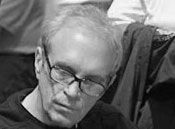
Player snapshot
- Full name: David Edward Reese
- Nickname: Chip
- Nationality: American
- Born: 28 March 1951, Centerville, Ohio
- Died: 4 December 2007, Las Vegas, Nevada (age 56)
- Hometown/base: Las Vegas, Nevada (1974–2007)
- Live tournament earnings: $3,999,090 (Hendon Mob, last cash 4 June 2007)
- WSOP bracelets: 3 (1978, 1982, 2006)
- WPT titles: 0 (one televised final table at the 2004 WPT Jack Binion World Poker Open)
- EPT titles: 0
- Major non-WSOP titles: Amarillo Slim’s Super Bowl of Poker $10,000 Deuce-to-Seven Lowball (1982); Grand Prix of Poker $5,000 Limit Seven-Card Stud (1984); Grand Prix of Poker $1,000 No-Limit Hold’em (1987)
- Hall of Fame: Inducted 1991 — the youngest living inductee at the time, aged 40
- Playing style: Mixed-game master; even-tempered; cash-game first
- Sponsors/team: Briefly associated with Full Tilt Poker late in life under the screen name “CaseyAtTheBat” (per third-party reports — never an official team patch); otherwise played without sponsorship for almost his entire career
Who is Chip Reese?
If you cornered Doyle Brunson, Phil Ivey, Bobby Baldwin, Mike Sexton or Barry Greenstein in 2007 and asked them to name the best all-around poker player they had ever sat down against, you would have heard the same three syllables in reply. Reese never had Brunson’s tournament resume, Hellmuth’s bracelet count or Ivey’s televised aura. What he had was something the rest of them quietly conceded he had more of than they did: an A-game in every game, a temperament that did not bend, and three decades of unbroken success in the toughest cash game on the planet.
His legend is anchored in three numbers and one game. Three WSOP bracelets, spread across three decades. One Poker Hall of Fame plaque, claimed in 1991 at the age of 40 — at the time, the youngest living player ever to be inducted. And one tournament — the inaugural $50,000 H.O.R.S.E. Championship at the 2006 World Series of Poker — built almost as a peer-elected coronation for the world’s best mixed-game player, which Reese duly won after a 286-hand, seven-hour-plus heads-up duel against Andy Bloch that remained the longest in WSOP history for years afterwards.
What makes a Reese profile harder to write than most is that the man behind the chips defies the stereotypes the poker boom built up. He was not a degenerate. He was not a showman. He was not a mathematician chained to a solver. He was a Dartmouth economics graduate who walked away from a $700,000 losing session to make his son’s Little League game, gave a brand-new Lincoln to his pastor, and once told Mike Sexton — in what may be the most-quoted line in cash-game folklore — that his only edge over the other elites in Bobby’s Room was that he didn’t steam.
Early life and path to poker
David Edward Reese was born on 28 March 1951 in the Dayton suburb of Centerville, Ohio, and the formative event of his childhood was an illness rather than a card game. He contracted rheumatic fever in elementary school and was kept home for the better part of a year. To pass the time, his mother taught him board games, bridge, gin rummy and most consequentially, poker. By the age of six, according to multiple PokerNews and WSOP-published accounts, he was reliably beating fifth-graders. Reese later described himself as “a product of that year.”
He was, by every available measure, an academic and athletic overachiever. He played football and joined the debate team in high school, winning the Ohio State debate championship and reaching the National Finals. He turned down an offer from Harvard to study economics at Dartmouth, where he joined Beta Theta Pi and methodically dismantled fraternity brothers and professors at the card table. The chapter house’s card room was later named the David E. Reese Memorial Card Room in his honour.
The Vegas detour is now folklore, and the details depend on who is telling it. The version Reese gave Mike Sexton — and which Doyle Brunson and WSOP media director Nolan Dalla repeated in interviews after his death — is that Reese was driving west in the summer of 1974, headed for Stanford (sources vary between Stanford Law School and Stanford Business School), when he stopped in Las Vegas with $400 in his pocket. By the end of the summer, he had built that into a six-figure bankroll, never enrolled at Stanford, and reportedly paid someone to drive his belongings out from his old apartment. According to PokerListings, his parents continued mailing him support cheques for a year before he admitted to them that he was no longer in law school but playing poker for a living.
Career timeline and breakthrough
Reese’s ascent through the Las Vegas poker hierarchy was unusually fast. By 1976, two summers after arriving, he had a regular seat in the highest-stakes seven-card stud and mixed games being spread at the Dunes and Binion’s Horseshoe — games populated by Doyle Brunson, Puggy Pearson and Amarillo Slim. By the end of the 1970s, two things had happened that mattered more for his reputation than any tournament result. First, Brunson, then unquestionably the dominant figure in American poker, declared in print that Reese was the best seven-card stud player he had ever played with. Second, Brunson asked him to write the seven-card stud chapter of Super/System. Super/System was published in 1979 and remains, almost half a century later, the most influential poker strategy book ever written. Reese was 28 when his contribution went into print.
His first WSOP bracelet had come a year earlier, in 1978, when he won the $1,000 Seven-Card Stud Split event for $19,200. His second arrived in 1982, in the $5,000 Seven-Card Stud event for $92,500. The same year, he took down the $10,000 Deuce-to-Seven Lowball event at Amarillo Slim’s Super Bowl of Poker for $84,000. By any reasonable read of the late-70s to early-80s tournament circuit, he was already a multi-discipline elite.
Then, almost completely, he stopped. From 1982 onward, Reese essentially withdrew from the tournament world to focus on cash games. He took a job as the Dunes’ card room manager in his late twenties — he was 28 at the time, per PokerListings — and held it for around five years. Most of his peers were on the road; Reese stayed in Vegas, played the biggest game running, and went home. The decision was rational. The Big Game at Bobby’s Room, when it migrated to the Bellagio in 1998, regularly featured $4,000/$8,000 limit stakes and produced individual sessions with seven-figure swings. Brunson has said publicly — both in interviews and in The Godfather of Poker — that he once dropped roughly $6 million to Reese in a single stretch.
The 1991 Poker Hall of Fame induction was the institutional confirmation of what the players already knew. Reese was 40 years old, had two bracelets to his name, and was inducted on the strength of his cash-game reputation rather than a glittering tournament resume. To put that in context: the next-youngest living inductee at the time the Hall began voting on living players was significantly older, and modern peers like Phil Hellmuth — eventually a 17-time bracelet winner — were only inducted years later and at older ages. The Hall vote in 1991 was an extraordinary peer assessment.
The career re-emergence is one of the more humanising subplots in poker history. By 2004, the poker boom triggered by Chris Moneymaker’s 2003 Main Event win was in full swing, and Reese’s three children — by then teenagers — wanted to see their father on television. According to Barry Greenstein, quoted in PokerListings’ obituary-era profile, that was the actual catalyst that brought Reese back to the tournament arena. He cashed at the 2004 WPT Jack Binion World Poker Open, finished fourth at his first televised WPT final table, and over the next three years booked 11 major cashes across the WSOP, WPT and other tour stops.
The peak came in 2006. The WSOP introduced a new event that summer — the $50,000 H.O.R.S.E. World Championship — explicitly designed, in the words of WSOP officials at the time, to identify the best all-around player on the planet. It drew 143 entrants, the largest buy-in in WSOP history at that point, and a final table that the poker press of the day genuinely believed was the strongest in WSOP history: Doyle Brunson, T.J. Cloutier, Phil Ivey, Patrik Antonius, Andy Bloch, Dewey Tomko, David Singer, Jim Bechtel and Reese himself. Reese chipped through the field, reached heads-up against Bloch with a near-even stack, and over 286 hands and seven hours and ten minutes — the longest heads-up battle in WSOP history at the time — outlasted him to win his third bracelet, $1,784,640, and what was widely called the most prestigious title in poker.
It was his last bracelet. Reese cashed in eleven WSOP and WPT events through June 2007 — his final recorded cash on Hendon Mob is for $41,229 on 4 June 2007 — and busted just short of the money in his title defence at the 2007 $50,000 H.O.R.S.E. event. On the night of 3 December 2007, by then 56 years old and reportedly suffering from flu-like symptoms diagnosed as pneumonia, he went to bed at his Las Vegas home and did not wake up. His son found him the following morning. The poker world’s reaction was immediate and unanimous. “I knew him for 35 years, I never saw him get mad or raise his voice,” Brunson told the Associated Press. “He’s certainly the best poker player that ever lived.”
Key titles and biggest results
The verified record below is drawn from the Hendon Mob database and the WSOP’s official tournament archive.
| Event | Year | Finish | Prize | Notes |
|---|---|---|---|---|
| WSOP $50,000 H.O.R.S.E. World Championship | 2006 | 1st | $1,784,640 | Inaugural event; defeated Andy Bloch heads-up after 286 hands and 7h 10m of play. Third and final WSOP bracelet. |
| WSOP $5,000 Limit Seven-Card Stud | 1982 | 1st | $92,500 | Second WSOP bracelet; capped his early-career tournament run. |
| WSOP $1,000 Seven-Card Stud Split | 1978 | 1st | $19,200 | First WSOP bracelet; same year he was tapped for Super/System. |
| Grand Prix of Poker $1,000 No-Limit Hold’em | 1987 | 1st | $108,400 | One of his largest non-WSOP scores. |
| Grand Prix of Poker $5,000 Limit Seven-Card Stud | 1984 | 1st | $100,000 | Reinforced his stud reputation outside the WSOP. |
| Super Bowl of Poker $10,000 Deuce-to-Seven Lowball | 1982 | 1st | $84,000 | Demonstrated cross-game range early. |
| WSOP $5,000 No-Limit Deuce-to-Seven Draw Lowball | 1988 | 2nd | $87,500 | One of four WSOP runner-up finishes. |
| PokerStars Caribbean Adventure Invitational $400,000 Final | 2004 | 5th | $250,000 | Final table included Doyle Brunson, Phil Ivey and Johnny Chan. |
| WSOP Main Event | 1989 | 23rd | $10,000 | One of two ITM finishes in the Main Event. |
| WSOP Main Event | 1993 | 26th | $12,000 | Second of his Main Event cashes. |
What this record collectively says about him is more interesting than the individual cashes. Reese is not, on tournament earnings alone, in the top 600 of the all-time money list as of late 2025 — his $3,999,090 lifetime cashes look modest next to modern grinders. But he has WSOP bracelets in three different decades, a final-table win in arguably the most peer-respected mixed-game event ever held, and his Hall of Fame plaque pre-dates almost every modern superstar’s. He was a final-table regular in the games that mattered to professionals, and his absence from the tournament leaderboard is not a weakness but a deliberate career choice. Reese chose Bobby’s Room over the Marriott ballroom — and in his era, that was where the real money was.
Playing style and strategic identity
The stylistic question that mattered for Reese was not “how does he play hold’em” — most of his cash-game career predated hold’em’s commercial dominance — but “how does he play anything?” The answer his peers consistently gave was: better than you, more calmly than you, in more games than you can keep track of.
The most repeated and arguably most useful summary of his edge comes via Mike Sexton’s 2016 memoir Life’s a Gamble, in which Sexton recounts asking Reese why he consistently came out on top of other top players. Reese’s reply, as Sexton recorded it, was that the others were every bit as good as him on their A-game — but they also had B, C and D games when they steamed, and almost all of them did. “My edge is that I don’t steam.” That single quote has become a kind of foundational text for high-stakes mixed-game players. It also matches every available account of his demeanour. Brunson said in 35 years he never saw Reese raise his voice. Bobby Baldwin, in his eulogy at Reese’s memorial published in Card Player, compared him to Michael Jordan: “Everybody wanted to be like Chip. He had the coolest demeanor and never rattled. He played great under pressure and played great even when he was losing.”
In specific terms, what that calmness translated into was something more concrete than mere composure. Reese was an early and obsessive practitioner of bankroll discipline at a time when many of his contemporaries treated their bankrolls as expendable. He was famous for refusing to play in games that weren’t right — meaning short-handed, unfavourable line-ups, or stakes that made bad variance unsurvivable — and he made no apology for it. According to a Beat the Fish profile, Reese was openly contemptuous of pros who waited for the perfect game and then complained that the action had dried up; he also waited, but he chose his spots with intention rather than fear.
His technical mastery was broadest in the games most modern players have never spent serious time on. Brunson’s call — that Reese was the best seven-card stud player he had ever sat with — has been echoed by enough credible peers (Sexton, Greenstein, Baldwin) that it should be taken at face value. He was an elite limit hold’em, deuce-to-seven lowball, razz, Omaha hi-lo and stud hi-lo player. The 2006 H.O.R.S.E. win was, in a sense, the only public evidence the recreational poker fan ever got that this range was real, but for the cash players who had been losing to him for 30 years it was a coronation that had been overdue since approximately 1985.
A line attributed to Reese in multiple secondary sources, and worth noting because it captures his philosophy more directly than any quote: “Law doesn’t have the same monetary incentive as poker.” It’s flippant and probably half a joke, but it’s also a reasonable summary of why he never made it to Stanford.
A second Reese-via-Sexton anecdote that has circulated for years: when Sexton asked Reese whether Stu Ungar was the best no-limit hold’em player ever, Reese reportedly answered, “Maybe. But it doesn’t matter. He never understood the object of the game.” Sexton’s gloss — that for Reese, the object of the game was to compound wealth and protect a lifestyle, not to gamble at the highest level you could every day — is probably the cleanest one-paragraph distinction between Reese and the figures he’s most often grouped with.
Cash games, the Big Game and online
If Reese’s tournament resume is selectively impressive, his cash-game record is the entire substance of the legend. From the late 1970s through the late 2000s, he was the central figure of what the poker world simply called the Big Game — first at the Mirage, then at the Bellagio’s Bobby’s Room from its opening in 1998. The room was named after his friend Bobby Baldwin; the seat in it most often associated with serious money was Reese’s. ESPN’s Bluff-magazine reporting from 2005 and 2006 lists him among a small core of regulars that also included Brunson, Lyle Berman, Johnny Chan, Jennifer Harman, Barry Greenstein, Chau Giang, Sammy Farha, Phil Ivey, Gus Hansen and Daniel Negreanu, with the structure rotating between $2,000/$4,000 and $4,000/$8,000 limit games and capped pot- and no-limit variants during major tournament weeks.
He was also one of the players who took on billionaire banker Andy Beal in the storied heads-up matches at Bobby’s Room in the early-to-mid 2000s, in which a syndicate of pros pooled bankrolls — Brunson, Reese, Harman, Ivey, Greenstein, Chan among them — to play Beal at $30,000/$60,000 to $100,000/$200,000 stakes. The episode, which forms the spine of Michael Craig’s The Professor, the Banker, and the Suicide King, is the closest mainstream documentation of how high Reese’s cash-game ceiling actually was.
His online presence was minor and largely posthumous in cultural memory. Several secondary sources, including macpokeronline.com, list his Full Tilt Poker screen name as “CaseyAtTheBat” and indicate he played there in his final years. This is not corroborated by Full Tilt’s own published records and should be treated as a reasonably-sourced report rather than a verified fact. There is no public record of him playing meaningful volume on PokerStars or any other site.
Beyond the felt
Reese’s life away from the table was, by every available account, conspicuously normal compared to his contemporaries. He raised three children — sons Casey and a stepdaughter Britney, and daughter Taylor, per ESPN’s 2007 obituary reporting. Multiple peers, including Greenstein and Brunson, have publicly emphasised that he prioritised his children over his bankroll. Greenstein told PokerListings: “He was a family man like no one else in poker. No matter what the situation was, if his kids had something going on — a baseball game, a recital, whatever — he would quit to go to it.” A widely-circulated Beat the Fish anecdote, which is consistent with Greenstein’s broader account, has Reese walking away from a $700,000 losing session to attend his son’s Little League game.
His business record was the polar opposite of his poker record. He and Doyle Brunson were business partners for years and lost money in essentially every venture they touched: oil wells, mining, television stations, racehorses, sports-betting consultancies. Brunson summed it up to the Associated Press the day after Reese died: “We went to look for the Titanic. We went to look for Noah’s Ark. We were two of the biggest suckers whenever it came to business, but we both had poker to fall back on.” The line is funny, but it is also the most candid acknowledgement on record from a peer that Reese, for all his table-game brilliance, did not have a separate edge in the broader investment world.
His writing legacy rests almost entirely on a single published contribution: the seven-card stud chapter in Doyle Brunson’s Super/System (1979). It is widely considered one of the two strategy chapters in that book — Brunson’s own no-limit hold’em chapter being the other — that has retained value across the decades. He did not write a solo book. He gave occasional interviews but was, by the standards of the modern poker boom, essentially uncommercial. He had no merchandise line, no training site, no podcast, no signature drink at a casino. The only thing that bears his name in poker, by his own design rather than corporate strategy, is the trophy.
The trophy itself is worth a paragraph. In 2008, the WSOP introduced the David “Chip” Reese Memorial Trophy as an additional prize for the winner of that year’s $50,000 H.O.R.S.E. event, won that summer by Scotty Nguyen. From 2010 onwards, when the H.O.R.S.E. event was replaced with the broader Poker Players Championship, the trophy moved with it. It is now considered the most prestigious physical award in tournament poker outside the WSOP Main Event bracelet itself. Recent winners include Brian Rast (2023), and the trophy continues to be presented annually at the WSOP. Bobby Baldwin’s eulogy framed the legacy plainly: “Five men have shaped my life and probably all of yours: Benny Binion, Jack Binion, Steve Wynn, Doyle Brunson, and David ‘Chip’ Reese.”
Cause of death — the one contested point
There is no significant ongoing controversy attached to Reese’s name; for a 33-year Las Vegas pro that itself is unusual. The one factual point that remains slightly contested concerns his cause of death. The official account, given by his physician and reported in the Associated Press story published the day he died, is that Reese went to bed on 3 December 2007 with flu-like symptoms diagnosed as pneumonia and died in his sleep at his Las Vegas home, where he was found by his son the following morning. Multiple sources — including Wikipedia and credible secondary outlets — note that Brunson, Greenstein and other close friends speculated that the cause of death may have been a blood clot related to a gastric bypass procedure Reese had undergone earlier. No autopsy result has been published in the open press. The pneumonia attribution is the one given by his treating physician on the night and is the version that appears in his official obituary record.
Current status and what to watch
Chip Reese has been gone for almost two decades, and the principal way his name now surfaces in public poker is through the trophy that bears it. The David “Chip” Reese Memorial Trophy is presented each summer at the WSOP Poker Players Championship. For a poker fan, the most relevant thing to watch over the next 12 months is the 2026 edition of that event — the field, the format, and the eventual winner. The PPC remains the closest thing the WSOP has to an aristocratic test of all-around skill, and the players who reach its final table almost universally cite Reese’s 2006 victory as the standard against which it is measured.
His sons and daughter have largely stayed out of the poker spotlight, and the Reese name now belongs to the game itself rather than to any active player.
FAQ
Chip Reese had $3,999,090 in verified live tournament earnings at the time of his death, according to the Hendon Mob database. That figure does not include cash-game winnings, sports-betting profits or any other form of gambling income. His career cash-game profits were never publicly itemised; peers including Doyle Brunson have said publicly that Reese was one of the largest winning cash-game players in Las Vegas across the 1980s, 1990s and 2000s, though no audited career total exists.
Chip Reese won three WSOP bracelets, in 1978, 1982 and 2006. His first was the $1,000 Seven-Card Stud Split event, his second the $5,000 Seven-Card Stud event, and his third — and most significant — the inaugural $50,000 H.O.R.S.E. World Championship in 2006, for which he received $1,784,640. The 24-year gap between his second and third bracelet remains one of the longer gaps between bracelets among the WSOP’s three-time-or-more bracelet winners.
Reese was a mixed-game specialist with an unusually even temperament and an emphasis on bankroll discipline. His self-described edge over other elite players, recorded by Mike Sexton in Life’s a Gamble, was that he never tilted: where his peers had B and C games when steaming, Reese only had his A-game. He was widely regarded by Doyle Brunson and others as the best seven-card stud player of his generation, and his prevention of large losses was as central to his profitability as his ability to win pots.
Chip Reese was born in Centerville, Ohio, a suburb of Dayton, on 28 March 1951. He attended Dartmouth College in New Hampshire, where he earned an economics degree, and moved to Las Vegas in the summer of 1974 on his way to Stanford. He never enrolled at Stanford and lived in Las Vegas continuously until his death in December 2007.
No. Chip Reese died on 4 December 2007 at his Las Vegas home, aged 56, from what his physician at the time recorded as pneumonia. He was inducted into the Poker Hall of Fame in 1991. The David “Chip” Reese Memorial Trophy, awarded each year to the winner of the WSOP Poker Players Championship, was created in his honour in 2008 and remains one of the most prestigious physical awards in tournament poker.
Reese never authored a solo poker book, but he wrote the seven-card stud chapter in Doyle Brunson’s Super/System (1979), which is widely considered one of the two strategy chapters from that book that have retained genuine instructional value across the decades. Brunson chose Reese for the chapter on the basis that he was, in Brunson’s view, the best seven-card stud player Brunson had ever played against.
The David “Chip” Reese Memorial Trophy was introduced at the 2008 WSOP, the summer after Reese’s death, as an additional prize for the winner of the $50,000 H.O.R.S.E. event. Reese had won the inaugural edition of that event in 2006, in a 286-hand, seven-hour-plus heads-up duel against Andy Bloch that remained the longest in WSOP history for years. When the H.O.R.S.E. event was replaced by the broader Poker Players Championship in 2010, the trophy moved with it and is presented annually to the new champion.